
Top 5 Must-Try AI Tools for SEO and AEO
The best AI tools for SEO and AEO help businesses improve traditional search performance while increasing their chances of appearing in AI-generated answers. Semrush, Ahrefs, and Surfer SEO combine established SEO capabilities with AI-powered features, while Profound and Peec AI focus more directly on AI search visibility. The right choice depends on whether you need better keyword research, content optimization, or insights into how AI platforms mention and recommend your brand.
Why AI Tools for SEO and AEO Matter
Search behavior is changing. People still use Google to find websites, compare products, and research questions, but they increasingly turn to ChatGPT, Perplexity, Gemini, and Google’s AI-powered search experiences for direct answers.
This creates two related optimization goals.
Search engine optimization (SEO) focuses on improving a website’s visibility in traditional search results through relevant content, technical performance, keyword targeting, and authority.
Answer engine optimization (AEO) focuses on making information clear, accessible, and useful enough to be surfaced in direct answers, including responses generated by AI-powered search tools.
Generative engine optimization (GEO) is another commonly used term for improving a brand’s visibility in generative AI responses.
These disciplines overlap, but they are not identical. A page can rank well in Google without being cited in every relevant AI answer. Likewise, a brand may appear in an AI-generated recommendation even when its website does not rank first for a particular keyword.
That is why AI tools for SEO and AEO should support three practical tasks:
- Discover opportunities: Identify relevant search queries, customer questions, and competitor content gaps.
- Improve content: Make pages accurate, well-structured, comprehensive, and easy to understand.
- Measure visibility: Track conventional rankings alongside brand mentions, citations, and appearances in AI-generated answers.
The following five tools approach these goals from different angles.
The Best 5 AI Tools for SEO and AEO
1. Semrush: AI Tools for SEO and AEO in One Platform
Semrush is an established digital marketing platform that combines traditional SEO research with AI search visibility features.
Key features
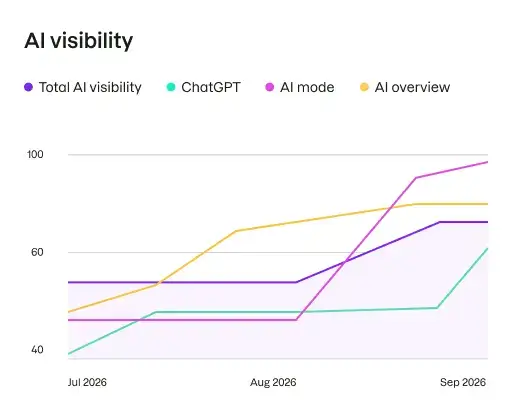
Semrush offers keyword research, competitor analysis, site audits, position tracking, and content-related tools. Its AI visibility capabilities extend this workflow by helping users understand how their brands appear in AI-generated answers.
Depending on the product and plan, users can explore:
- AI visibility across platforms such as ChatGPT, Gemini, and Google’s AI search experiences.
- Competitor comparisons and topics where competing brands receive more attention.
- Brand mentions, citations, sentiment, and recurring narratives in AI answers.
- Prompt tracking and recommendations for improving content visibility.
The benefit is that SEO and AEO research can happen within a connected marketing workflow rather than across several disconnected tools.
Example use case
Imagine you run a SaaS company targeting the keyword “best AI project management software.” Your website already receives organic traffic, but competitors appear more frequently in AI-generated product comparisons.
You could use Semrush to examine keyword opportunities, review competing pages, identify technical problems, and investigate AI visibility gaps. The resulting research can guide updates to your comparison pages, feature descriptions, and supporting articles.
This is an illustrative workflow, not a claim of measured ranking or traffic improvements.
Pros and limitations
Best for: Marketing teams that want SEO research, technical analysis, and AI visibility monitoring in one environment.
Main limitation: Semrush offers a broad range of features, which can make the platform more complex than a dedicated AI visibility tracker. Some capabilities also depend on the selected subscription.
Official product information: Semrush AI Visibility.
2. Ahrefs: AI Search Insights Backed by SEO Data
Ahrefs is widely known for backlink analysis, keyword research, and competitive SEO research. Its Brand Radar product extends that foundation into AI search visibility.
Key features
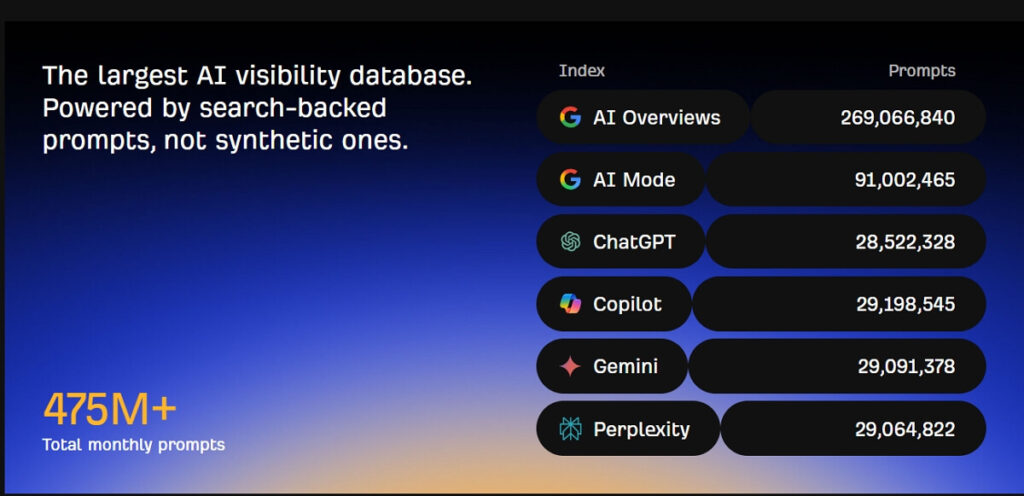
Ahrefs Brand Radar helps users investigate how brands appear in AI-generated responses and which sources influence those responses.
Its capabilities include:
- Tracking brand mentions and citations in AI answers.
- Comparing AI visibility with competitors.
- Exploring prompts and questions relevant to potential customers.
- Identifying cited pages and domains that may represent content opportunities.
- Examining related visibility signals from sources such as YouTube and Reddit.
This connection between traditional SEO research and AI search analysis is particularly useful. AI-generated answers do not exist in isolation; published websites and other online sources can influence the information users encounter.
Example use case
Suppose a software company wants to become a more frequent recommendation for “best free website builders for small businesses.”
The SEO team could research the topic’s search demand, inspect competing pages, and use Brand Radar to investigate which brands and sources appear in relevant AI answers.
If competitors are repeatedly associated with detailed comparisons, pricing explanations, or feature-specific pages, the company could evaluate whether its own content answers those questions clearly.
The important distinction is that identifying a citation opportunity does not guarantee that an AI system will cite the updated page.
Pros and limitations
Best for: SEO professionals who want to connect keyword and competitor research with AI visibility insights.
Main limitation: Brand Radar is a specialized product within the broader Ahrefs ecosystem. Access, monitoring volume, and platform coverage depend on the selected plan or add-on.
3. Surfer SEO: AI-Assisted Content Optimization for SEO and AEO
Surfer SEO focuses on content optimization. Rather than concentrating primarily on backlinks or broad market analysis, it helps writers and SEO teams improve the relevance and completeness of individual pages.
Key features
Surfer’s content tools analyze target topics and competing search results to provide guidance on how a page can better address a subject.
Depending on the product and plan, its capabilities include:
- Content analysis and recommendations for relevant terms.
- Search-intent evaluation and topic coverage suggestions.
- AI-assisted content creation and optimization.
- AI search visibility monitoring through its AI Tracker offering.
These features can support both SEO and AEO. A well-organized article that answers questions directly, explains important concepts, and covers relevant subtopics may be more useful to readers and easier for search systems to interpret.
However, a high content score is not a guarantee of better rankings or AI citations.
Example use case
Consider a blog post titled “Best Email Marketing Tools.” It lists products but provides little information about pricing, integrations, automation, or the types of businesses each product suits.
A content optimization workflow could identify missing subtopics and help the writer add a clear comparison table, explain important selection criteria, and answer common buyer questions.
For AEO, the improvement is not simply adding more keywords. It is making the information more complete, specific, and straightforward to interpret.
Pros and limitations
Best for: Bloggers, publishers, and content marketing teams that regularly create and update SEO articles.
Main limitation: Content recommendations are guidance, not a substitute for editorial judgment. Following competitor-based recommendations too closely can also produce repetitive content that lacks original insight.
4. Profound: AI-Native Search Visibility and Optimization
Profound takes a different approach from traditional SEO platforms. Its core focus is understanding how brands appear across AI answer engines and identifying opportunities to improve that visibility.
Key features
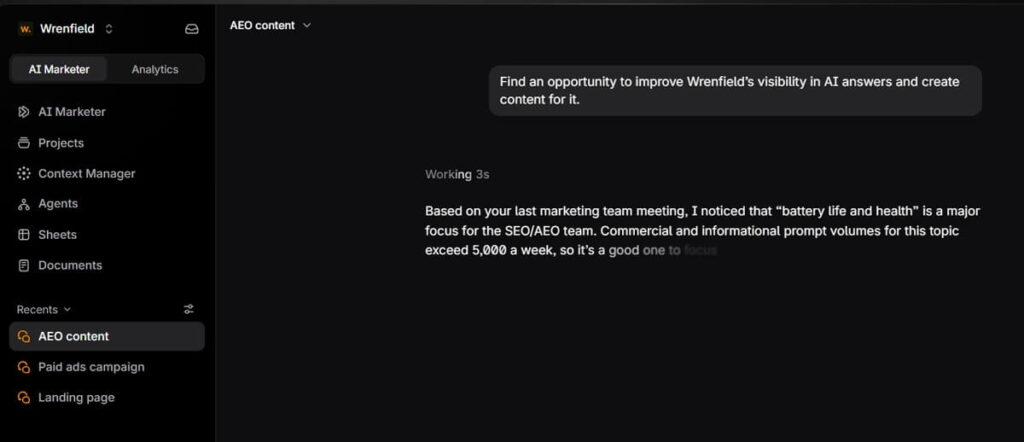
Profound’s platform includes capabilities for:
- Monitoring prompts and the questions that surface a brand or its competitors.
- Measuring brand visibility, share of voice, and sentiment in AI-generated answers.
- Tracking citations and identifying sources used in AI responses.
- Benchmarking competitors across AI search.
- Using recommendations and agent-based workflows to identify optimization opportunities.
Its product has also expanded to incorporate SEO-related data, helping teams connect AI search performance with information about their web pages, keywords, and authority.
Example use case
A B2B software company discovers that AI assistants frequently recommend three competitors when users ask which tools are best for a particular industry.
With Profound, the marketing team could investigate the prompts where competitors appear, examine cited sources, and identify questions the company’s existing content does not answer adequately.
The team might then improve product documentation, publish a detailed industry comparison, or strengthen pages that explain specific use cases.
This creates a more focused content plan than publishing additional articles without understanding the visibility gap.
Pros and limitations
Best for: Brands, larger marketing teams, and agencies that need structured AI search monitoring and optimization workflows.
Main limitation: Its specialized capabilities may be excessive for a small website that only needs basic keyword research. Pricing and available features should be checked against current requirements.
5. Peec AI: Track Brand Visibility Across AI Search Engines
Peec AI is an AI search analytics platform designed to help marketing teams understand where and how their brands appear in AI-generated answers.
Unlike a traditional SEO suite, its central focus is monitoring AI search performance and turning those observations into actionable insights.
Key features
Peec AI supports workflows for:
- Defining and organizing relevant prompts.
- Tracking brand visibility across supported AI models.
- Comparing a brand’s presence with competitors.
- Identifying sources cited in AI answers.
- Discovering potential content opportunities from visibility data.
The platform is particularly relevant to teams that want to measure AI search performance without building a manual process for repeatedly checking the same questions across different AI assistants.
Example use case
Suppose a small marketing agency wants to understand whether its client is recommended when potential customers ask AI tools for the best accounting software for freelancers.
The agency could define a set of relevant prompts, monitor the client’s visibility alongside competing brands, and examine which websites are cited in the answers.
If competitors appear consistently while the client does not, the agency can investigate whether important product details, independent reviews, or useful comparison content are missing from the client’s online presence.
This process helps prioritize investigation and content improvements. It does not establish that any single content change will cause a brand to appear in AI answers.
Pros and limitations
Best for: Marketing teams and agencies that prioritize AI search analytics, prompt monitoring, and competitive visibility.
Main limitation: AI visibility metrics do not replace traditional measures such as organic traffic, conversions, or keyword rankings. Teams should combine them with website analytics and business outcomes.
AI Tools for SEO and AEO: Comparison and Recommendations
Choosing between these five tools is easier when you start with the problem you need to solve rather than the number of features a platform advertises.
| Tool | Main strength | SEO support | AI search focus | Best suited for |
|---|---|---|---|---|
| Semrush | Broad marketing research | Strong | Visibility tracking and analysis | All-around marketing teams |
| Ahrefs | Keywords, backlinks, and competitors | Strong | Brand Radar and AI visibility | SEO specialists |
| Surfer SEO | On-page content optimization | Strong | Content optimization and AI Tracker | Writers and publishers |
| Profound | AI answer monitoring and optimization | Expanding | Deep AI visibility workflows | Brands and larger teams |
| Peec AI | AI search analytics | More specialized | Prompt tracking and citations | Agencies and marketing teams |
Feature availability varies by subscription and may change. Check each vendor’s current documentation before purchasing.
A practical decision framework
Rather than subscribing to all five, start with one tool that addresses your biggest gap.
- Choose Semrush if you want a broad SEO toolkit alongside AI visibility analysis.
- Choose Ahrefs if keyword research, backlink analysis, and competitive research are central to your work.
- Choose Surfer SEO if your primary challenge is producing and improving content at scale.
- Choose Profound if you need deeper insight into how AI answer engines represent your brand and competitors.
- Choose Peec AI if you want a dedicated workflow for tracking AI search prompts and analyzing citations.
An important distinction is that AI visibility and content optimization answer different questions. Visibility tracking tells you where your brand appears; content optimization helps you improve the information you publish. Neither guarantees the other.
For a small website, it may be more practical to establish a solid SEO foundation first, then add a dedicated AI visibility tool when you have enough important queries and competitors to monitor.
Frequently Asked Questions About AI Tools for SEO and AEO
1. What are AI tools for SEO and AEO?
They are software platforms that use AI or AI-related analytics to help improve search visibility. Some focus on keyword research and content optimization, while others monitor brand mentions and citations in AI-generated answers.
2. What is the difference between SEO and AEO?
SEO focuses on improving visibility in search engine results. AEO focuses on making information more likely to be surfaced in direct answers, including AI-generated responses. The two approaches overlap, but their measurement methods differ.
3. Can AI tools help a brand appear in ChatGPT answers?
They can help identify visibility gaps, improve content, and monitor brand mentions or citations. However, no tool can guarantee that ChatGPT or another AI system will recommend a particular brand.
4. Which AI tool is best for SEO and AEO beginners?
Semrush is worth considering for users who want a broad marketing toolkit. Surfer SEO may suit content-focused beginners, while Peec AI may be more relevant when AI search visibility is the primary concern. The best choice depends on budget and workflow.
5. How do you measure AEO performance?
Track several signals together: brand mentions in AI answers, citation frequency, share of voice against competitors, referral traffic from AI platforms, organic search performance, and conversions. Use a consistent set of prompts and compare results over time rather than relying on a single snapshot.
The goal is not simply to appear more frequently in AI answers. It is to become visible for relevant questions and turn that visibility into meaningful visits, trust, and business outcomes.
Final takeaway: The strongest AI tools for SEO and AEO are not necessarily the ones with the most automation. They are the ones that help you identify a real visibility problem, make a useful improvement, and measure whether that improvement matters.

 English