
Top AI Cloud Business Management Platform Tools
The business landscape in 2026 is more competitive than ever, and companies are increasingly relying on top AI cloud business management platform tools to streamline operations, enhance decision-making, and drive growth. Whether you’re a small business or a large enterprise, integrating top AI tools for business into your workflow can significantly improve efficiency, reduce costs, and provide actionable insights.
With so many options available, choosing the right platform can be overwhelming. In this guide, we’ll explore the top cloud management platforms powered by AI, evaluating their features, strengths, and weaknesses to help you make an informed decision.
Benefits of Using Top AI Cloud Business Management Platform Tools
Before diving into the best tools, let’s discuss why businesses should consider adopting top AI cloud business management platform tools for customers:
- Automation & Efficiency – AI-driven platforms automate repetitive tasks, freeing up employees to focus on strategic initiatives.
- Data-Driven Decisions – Advanced analytics and machine learning provide real-time insights for smarter business choices.
- Scalability – Cloud-based AI solutions grow with your business, ensuring flexibility without heavy infrastructure investments.
- Cost Savings – Reducing manual labor and optimizing operations leads to significant financial benefits.
- Enhanced Customer Experience – AI-powered personalization improves engagement and satisfaction.
Now, let’s explore the top AI for business platforms that are leading the market in 2026.
Top AI Cloud Business Management Platform Tools
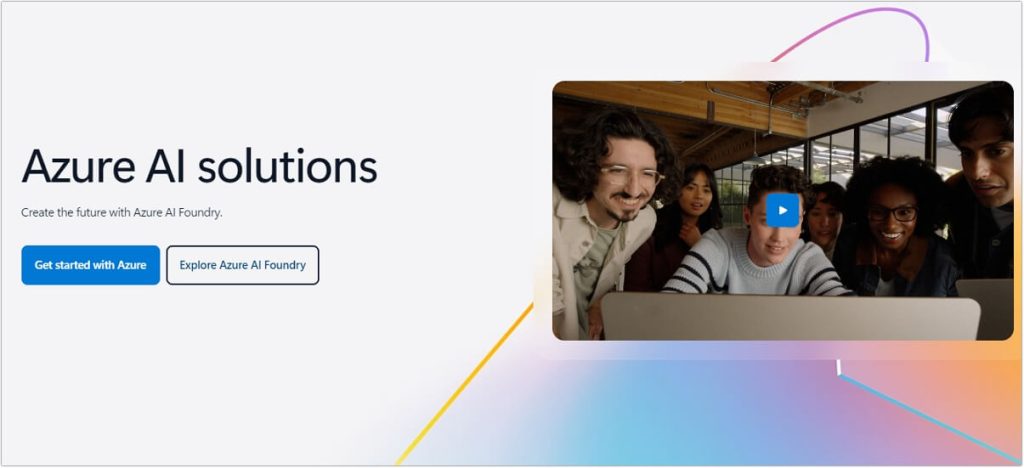
1. Azure AI Platform
Best for: Enterprises needing scalable AI solutions with deep Microsoft integration.
Microsoft’s Azure AI Platform remains a dominant force in 2026, offering robust machine learning, cognitive services, and AI model deployment. It seamlessly integrates with Microsoft 365, Dynamics 365, and Power BI, making it ideal for businesses already in the Microsoft ecosystem.
Key Features:
✔ Pre-built AI models for vision, speech, and language processing
✔ Strong security and compliance (GDPR, HIPAA)
✔ Supports hybrid and multi-cloud deployments
Pros:
✅ Excellent integration with Microsoft products
✅ High scalability for enterprise use
✅ Strong developer tools
Cons:
❌ Steeper learning curve for beginners
❌ Can be expensive for small businesses
Expert Comment:
“Azure AI is unmatched for enterprises that need deep integration with Microsoft’s suite. Its security features alone make it a top choice for regulated industries.” – Mark R., AI Solutions Architect
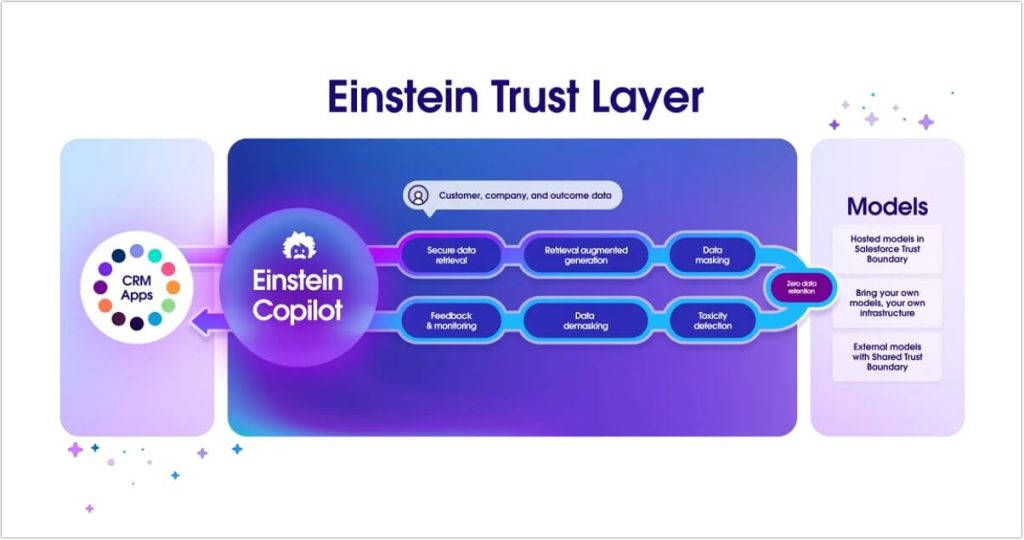
2. Salesforce Einstein AI
Best for: CRM-driven businesses wanting AI-powered sales and marketing automation.
Salesforce’s Einstein AI continues to lead in customer relationship management (CRM) by embedding AI directly into sales, service, and marketing workflows. It predicts customer behavior, automates responses, and personalizes interactions at scale.
Key Features:
✔ Predictive lead scoring
✔ Automated email and chat responses
✔ AI-driven analytics for sales forecasting
Pros:
✅ Intuitive for Salesforce users
✅ Strong focus on sales and marketing automation
✅ Real-time customer insights
Cons:
❌ Limited outside Salesforce ecosystem
❌ Pricing can escalate with add-ons
User Review:
“Einstein AI transformed our sales process—it predicts which leads will convert with scary accuracy!” – Sarah L., Sales Director
3. Google Cloud AI Platfor
Best for: Businesses leveraging Google’s AI and data analytics tools.
Google’s Cloud AI Platform excels in machine learning model training and deployment, with seamless integration into BigQuery, Vertex AI, and TensorFlow. It’s a favorite among data scientists and developers for its flexibility and cutting-edge AI capabilities.
Key Features:
✔ AutoML for no-code AI model building
✔ Advanced natural language processing (NLP)
✔ Strong data analytics integration
Pros:
✅ Powerful AI/ML tools for developers
✅ Strong NLP and computer vision capabilities
✅ Scalable for large datasets
Cons:
❌ Requires technical expertise
❌ Can get costly with high data usage
Expert Comment:
“Google Cloud AI is the go-to for businesses that need high-performance ML models without managing infrastructure.” – Dr. Emily T., Data Scientist
4. Oracle AI Cloud Services
Best for: Enterprises using Oracle ERP/CRM needing embedded AI capabilities.
Oracle’s AI Cloud Services stands out in 2026 with its deep integration across Oracle’s enterprise applications. What makes it unique is its industry-specific AI solutions for finance, supply chain and HR.
Key Features:
✔ Pre-built AI models for enterprise processes
✔ Strong data security with Oracle Cloud Infrastructure
✔ Real-time decision automation
Pros:
✅ Excellent for existing Oracle customers
✅ Strong industry-specific solutions
✅ Robust data governance
Cons:
❌ Less flexible for non-Oracle environments
❌ Complex pricing structure
User Review:
“The AI-powered demand forecasting in our supply chain has reduced inventory costs by 18% this year alone.” – David K., Supply Chain Manager
5. Morpheus Data
Best for: Multi-cloud management and cost optimization.
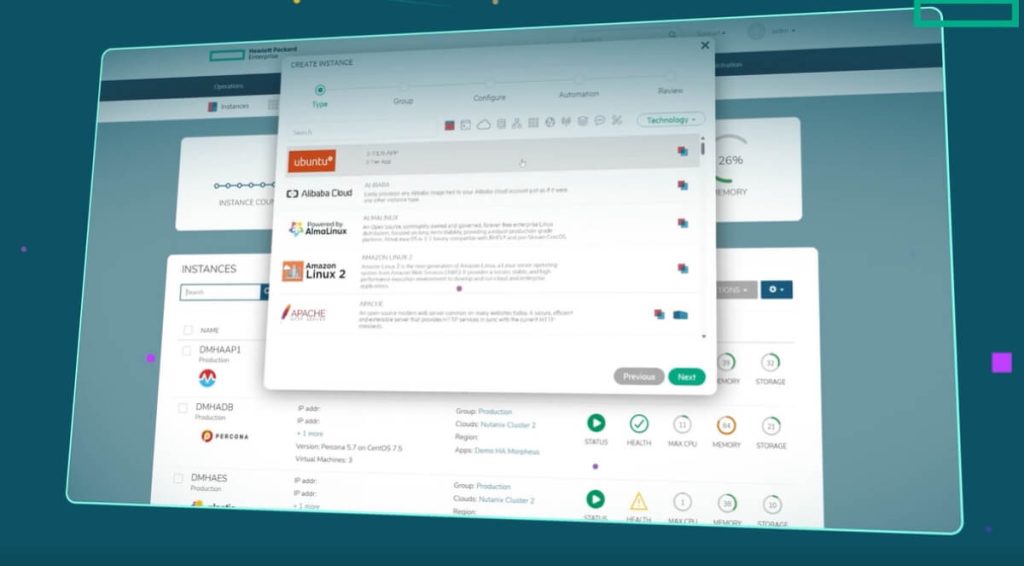
Morpheus has emerged as a leader in AI-driven cloud management, particularly for organizations using multiple cloud providers. Its 2026 updates include predictive cost analytics and automated resource scaling.
Key Features:
✔ Unified multi-cloud management
✔ AI-powered cost optimization
✔ Automated compliance checks
Pros:
✅ Excellent cross-platform visibility
✅ Significant cloud cost savings
✅ Intuitive interface
Cons:
❌ Limited AI capabilities outside cloud ops
❌ Steep learning curve
Expert Comment:
“Morpheus is our secret weapon for managing AWS, Azure and GCP from one console while keeping costs under control.” – Lisa M., Cloud Architect
6. SOLIXCloud Enterprise AI
Best for: Data-heavy enterprises needing AI-powered governance.
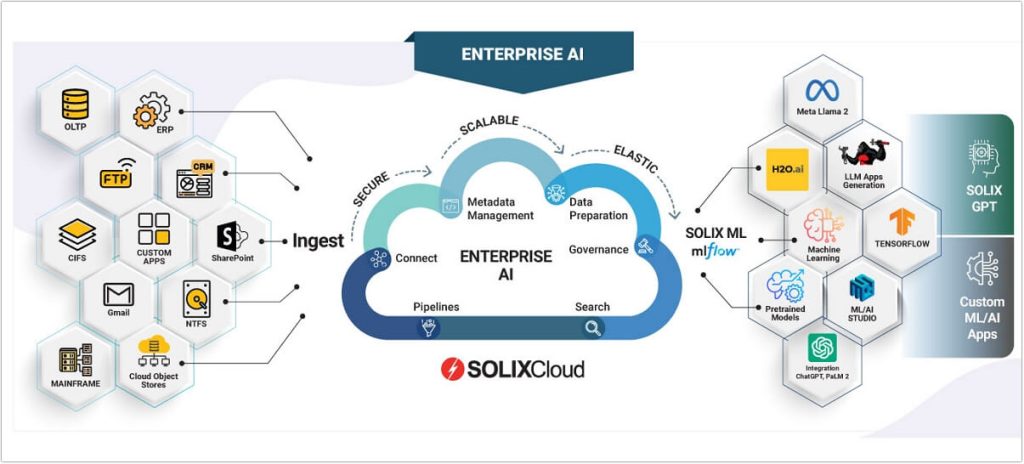
SOLIXCloud has gained traction in 2026 for its unique focus on AI-driven data management and compliance, particularly useful for financial services and healthcare.
Key Features:
✔ Automated data classification
✔ AI-powered compliance monitoring
✔ Sensitive data detection
Pros:
✅ Excellent for regulated industries
✅ Reduces manual data governance work
✅ Strong security features
Cons:
❌ Narrower focus than general AI platforms
❌ Requires data migration
User Review:
“We cut our GDPR compliance preparation time by 60% using SOLIX’s automated data mapping.” – Priya N., Data Privacy Officer
7. Optimum AI
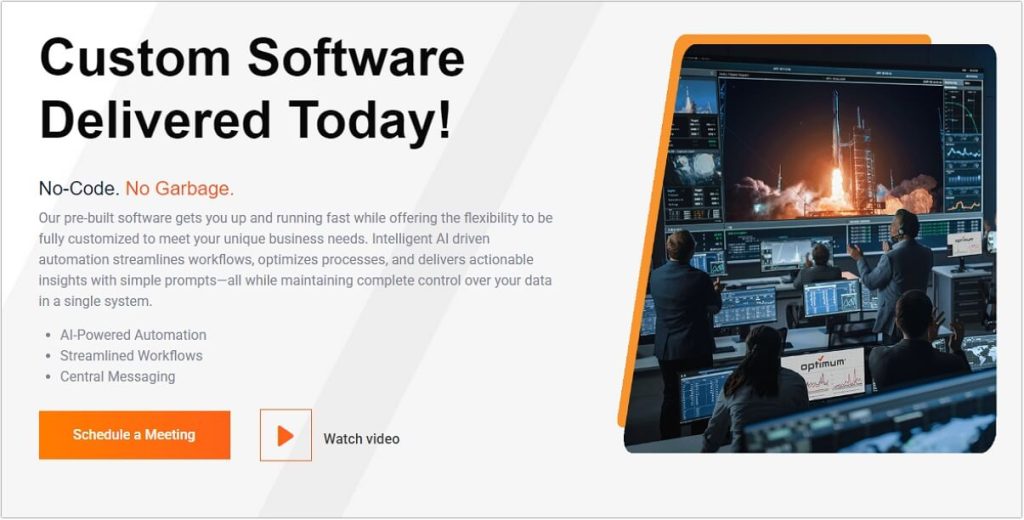
Best for: HR and workforce optimization.Optimum AI has carved out a niche in human capital management with its 2026 release featuring advanced workforce analytics and employee sentiment analysis.
Key Features:
✔ Employee performance predictions
✔ Turnover risk scoring
✔ Skills gap analysis
Pros:
✅ Very user-friendly for HR teams
✅ Actionable people analytics
✅ Good integration with major HRIS
Cons:
❌ Limited outside HR use cases
❌ Smaller developer community
Expert Comment:
“Optimum’s AI helped us reduce unwanted turnover by identifying at-risk employees before they quit.” – Jamal R., CHRO
8. Amazon SageMaker
Best for: AWS-centric companies building custom ML models.
Amazon SageMaker continues to dominate in 2026 for organizations wanting to build, train and deploy machine learning models at scale on AWS infrastructure.
Key Features:
✔ Fully managed ML environment
✔ Broad algorithm selection
✔ One-click model deployment
Pros:
✅ Best-in-class for custom ML development
✅ Deep AWS integration
✅ Pay-as-you-go pricing
Cons:
❌ Requires ML expertise
❌ Can get expensive at scale
User Review:
“We deployed 3x more ML models last year thanks to SageMaker’s streamlined workflow.” – Tom S., ML Engineer
Comparison Table of Top AI Cloud Business Management Platform Tools
| Platform | Best For | AI Strengths | Pricing |
|---|---|---|---|
| Azure AI Platform | Enterprises, Microsoft users | Deep learning, security | Pay-as-you-go |
| Salesforce Einstein AI | CRM & sales automation | Predictive analytics | Subscription-based |
| Google Cloud AI | Data scientists, ML engineers | AutoML, NLP | Usage-based |
| Oracle AI Cloud Services | ERP & database-driven AI | Business process automation | Custom quotes |
| Morpheus Data | Multi-cloud management | Infrastructure optimization | Tiered pricing |
| SOLIXCloud Enterprise AI | Data governance & compliance | AI-driven data management | Enterprise pricing |
| Optimum AI | HR & workforce optimization | Employee performance insights | Subscription |
| Amazon SageMaker | AWS-based AI/ML development | End-to-end ML pipelines | Pay-per-use |
FAQs About Top AI Cloud Business Management Platform Tools
Q1: What makes 2026’s AI cloud platforms different from previous years?
A: The 2026 generation emphasizes:
- Auto-governance (AI that self-monitors for bias/compliance)
- Multi-modal AI (simultaneously processing text, voice, and video data)
- Energy-efficient models (like Tesla’s new green AI benchmarks)
- Plug-and-play industry templates (pre-built for healthcare, retail, etc.)
Q2: Which platform is best for small businesses on a budget?
A: In 2026, these stand out for SMBs:
- Google Cloud AI (pay-as-you-go AutoML)
- Optimum AI (HR-focused, starts at $99/month)
- Salesforce Einstein (if already using Salesforce)
Pro Tip: AWS now offers SageMaker Nano for lightweight ML projects under $50/month.
Q3: How do these tools handle data privacy with new 2026 regulations?
A: Platform-specific approaches:
| Platform | 2025 Privacy Feature |
|---|---|
| Azure AI | Automatic EU AI Act compliance checks |
| SOLIXCloud | Quantum encryption for sensitive data |
| Oracle AI | On-premise AI deployment options |
Q4: Can I integrate these with legacy systems?
A: Yes, but with varying ease:
- Easiest: Morpheus Data (API-first architecture)
- Hardest: SOLIXCloud (requires data migration)
- Special Case: Oracle AI seamlessly connects to old Oracle DBs
2025 Trend: New middleware tools like Boomi AI Connectors are bridging this gap.
Q5: What skills do my team need to implement these?
A: Depends on the platform:
- Low-code: Einstein, Optimum (trainable in 1-2 weeks)
- Pro-code: SageMaker, Google AI (need Python/ML knowledge)
- Hybrid: Azure, Oracle (drag-and-drop + advanced modes)
2025 Solution: Platforms now offer AI-powered onboarding chatbots that customize training.
Conclusion
The top cloud management platforms in 2026 are more advanced than ever, offering AI-driven automation, analytics, and scalability. Whether you choose Azure AI, Salesforce Einstein, or Google Cloud AI, each platform brings unique strengths to the table.
For businesses looking to stay ahead, investing in top AI for business solutions is no longer optional—it’s essential. Evaluate your needs, test demos, and select the platform that best fits your strategy.
Which AI cloud platform are you considering? Let us know in the comments! 🚀

 English