
NotebookLM vs ChatGPT: A Detailed Comparison
In the rapidly evolving landscape of AI-powered productivity, two standout tools have emerged for transforming how we capture, process, and utilize information: Google’s NotebookLM and OpenAI’s ChatGPT. For professionals, students, and lifelong learners seeking smarter note-taking and knowledge synthesis, the choice between these platforms is significant. This comprehensive NotebookLM vs ChatGPT comparison will dissect their capabilities, guiding you to the optimal tool for your workflow. We’ll delve into their core functions, unique features, and practical applications, answering the pivotal question: what can NotebookLM do that ChatGPT cannot, and vice versa?
What is NotebookLM?
NotebookLM, formerly known as Project Tailwind, is an experimental AI notebook developed by Google. Its fundamental premise is to act as a specialized research and writing assistant that grounds its responses in your own provided sources. Unlike generic chatbots, NotebookLM allows you to upload documents—PDFs, text files, Google Docs, and even audio transcripts—to create a personalized “source ground.” The AI then analyzes this corpus of information, enabling you to ask questions, generate summaries, create outlines, and synthesize ideas based exclusively on your uploaded materials. NotebookLM excels at text-based synthesis from your documents. If your specific need is to have AI-processed information converted into listenable audio summaries, our review of the AI Apps Like NotebookLM with Audio Output explores dedicated tools for this purpose.
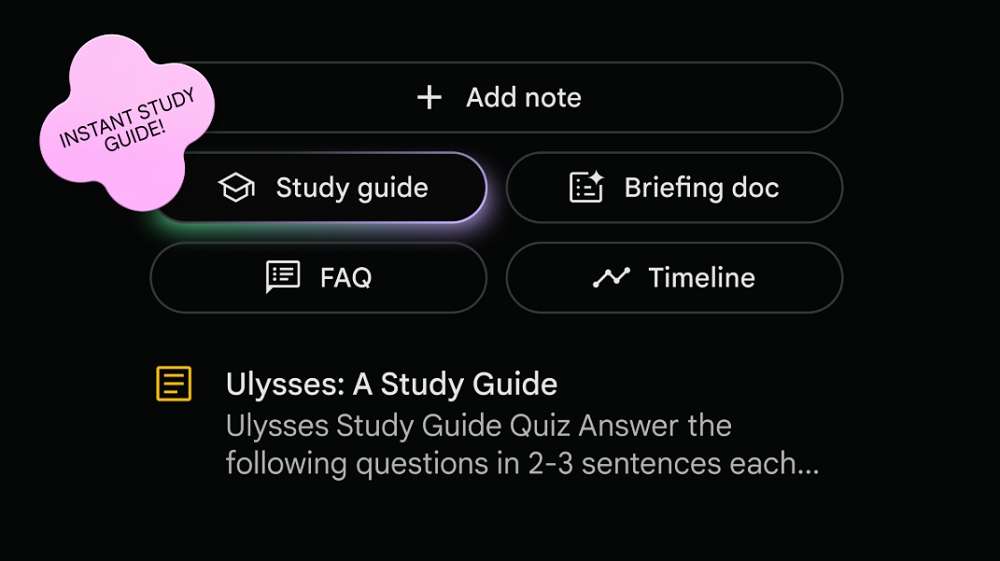
This source-grounded approach minimizes AI “hallucination” (fabrication of facts) within the context of your work, making it a powerful tool for deep research analysis, literature reviews, and content creation anchored in specific references. A key feature is its “notebook” interface, where you can pin AI-generated insights, create new notes, and organize ideas alongside your source material.
What is ChatGPT?
ChatGPT, developed by OpenAI, is a versatile, large language model (LLM) capable of engaging in dialogue, answering questions, and assisting with a vast array of tasks. Its strength lies in its generalized knowledge, drawn from a massive and diverse training dataset, and its exceptional conversational fluency. For note-taking and ideation, users leverage ChatGPT to brainstorm ideas, draft content, explain complex topics, and organize information through prompted dialogue.
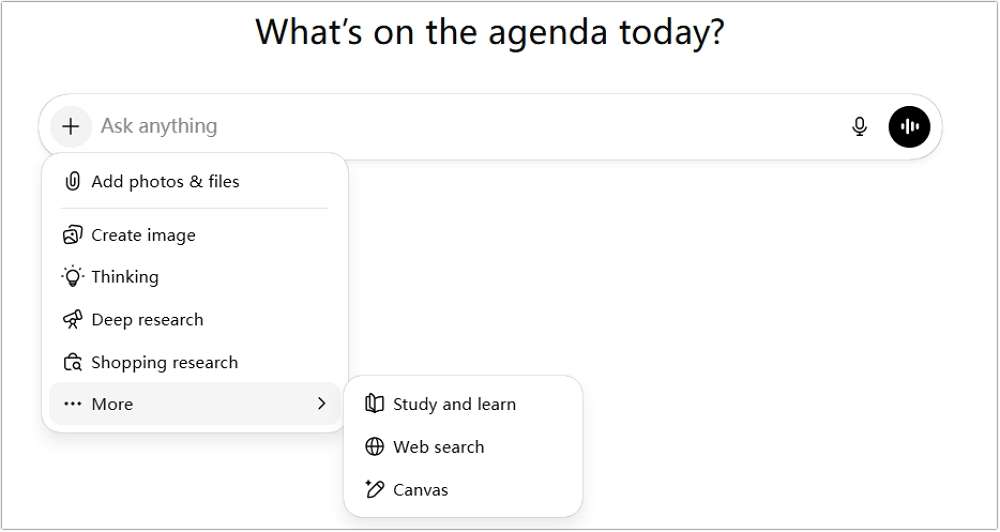
Available in a free tier (GPT-3.5) and a premium subscription (ChatGPT Plus with GPT-4 and advanced features), it functions as a jack-of-all-trades AI assistant. Its application in note-taking is more unstructured and conversational, relying on the user’s skill in crafting prompts to guide the output, rather than being intrinsically tied to a set of user-provided documents.
NotebookLM vs ChatGPT: A Head-to-Head Comparison
To truly understand the NotebookLM vs ChatGPT dynamic, we must compare them across several critical dimensions.
- Ease of Use: NotebookLM’s interface is streamlined for its specific purpose: upload sources and interact. This makes it intuitively easy for its core task. ChatGPT offers a simple chat interface but requires more user effort to structure conversations for complex note-taking or research projects. The learning curve for effective prompt engineering is steeper.
- Accuracy and Reliability for Note-Taking: This is a defining difference. NotebookLM excels by tethering its outputs to your sources, providing citations for every claim and significantly reducing factual errors within your material’s context. ChatGPT, while knowledgeable, can generate plausible but incorrect or outdated information (“hallucinations”) unless specifically prompted to cite sources, a feature more robustly available in its Plus tier with web browsing.
- Customization Options: ChatGPT wins in breadth. Its functionality can be customized infinitely through detailed prompts for tone, style, format, and role-playing. NotebookLM’s customization is deeper but narrower, focused entirely on adapting its analysis to the specific documents you provide. It’s a specialized tool versus a general-purpose one.
- User Experience and Interface: NotebookLM provides a cohesive workspace where sources, notes, and AI interactions coexist. It feels like a dedicated project hub. ChatGPT’s experience is linear and conversational within a chat thread, which can become cluttered for long-term project management unless meticulously organized by the user.
- Price: Currently, NotebookLM is free to use (in its experimental phase with limited availability). ChatGPT offers a capable free version (GPT-3.5), but its most powerful features for serious work—like GPT-4, file upload, and advanced data analysis—require a ChatGPT Plus subscription ($20/month).
NotebookLM vs ChatGPT: Unique Features
Each tool has distinct capabilities that set it apart.
NotebookLM’s Unique Strengths:
- Source-Grounded AI: Its core innovation. You get AI analysis that references your uploaded documents directly.
- Automated Citation: Every response includes source references, fostering credibility and traceability.
- Structured Idea Development: Features like “Convert notes into a script” or “Create a study guide” directly from your sources facilitate structured output.
ChatGPT’s Unique Strengths:
- Vast General Knowledge: Can draw on a world of information up to its last training cut-off, ideal for exploratory learning and brainstorming beyond your personal documents.
- Plugin and Integration Ecosystem (Plus): Can connect to web services for real-time data, document analysis (in chat), and specialized tasks via GPTs.
- Unmatched Conversational Versatility: Can seamlessly switch between roles—tutor, editor, brainstorming partner—in a single conversation.
Pros and Cons of NotebookLM vs ChatGPT
NotebookLM:
- Pros: Unbeatable accuracy for document-specific work; eliminates hallucinations relative to your sources; clean, purpose-built interface; automated citations; currently free.
- Cons: Limited to analyzing provided sources (lacks broad world knowledge); still in experimental/limited release; less versatile for general tasks.
ChatGPT:
- Pros: Extremely versatile for a million different tasks; strong general knowledge base; advanced capabilities with Plus subscription (GPT-4, web search, data analysis); excellent for unstructured ideation and dialogue.
- Cons: Prone to hallucinations unless carefully managed; requires prompt engineering for best results; chat interface can be less optimal for organizing long-form project notes; premium features require subscription.
NotebookLM vs ChatGPT: Which Tool is Better for Smarter Note-Taking?
The answer to the google notebooklm vs chatgpt debate hinges entirely on your definition of “smarter note-taking.”
- Choose NotebookLM if: Your note-taking is research-intensive, source-heavy, and requires high factual fidelity. It is the superior choice for academics, researchers, analysts, writers, and students working with specific sets of literature, meeting notes, or interview transcripts. It’s designed for smarter note-taking that builds knowledge from the ground up, based on evidence.
- Choose ChatGPT if: Your note-taking is more about ideation, synthesizing general knowledge, brainstorming, and first-draft creation from scratch. It’s ideal for creatives, strategists, and learners exploring topics without a predefined document set. Its strength is breadth and conversational intelligence, making note-taking a dynamic dialogue.
For the most powerful workflow, consider using both. Use NotebookLM to deeply analyze, summarize, and quote from your core source materials. Then, feed those synthesized insights into ChatGPT to brainstorm applications, expand ideas with broader context, or refine the writing style. This combines grounded accuracy with creative expansion.
Conclusion
The NotebookLM vs ChatGPT comparison reveals not a simple winner, but a clear distinction in philosophy and application. NotebookLM is a precision tool for evidence-based knowledge work, excelling where trust and traceability are paramount. ChatGPT is a versatile creative and analytical engine, unparalleled in its ability to generate and manipulate ideas from a vast knowledge pool.
Remember, the AI productivity space is rich and rapidly evolving. Beyond these two giants, numerous other applications are fine-tuning the art of smart note-taking. Whether you’re seeking NotebookLM alternatives with different feature sets or want to explore the potential of entirely free AI notes generators, there’s likely a tool tailored to your workflow. Exploring our detailed comparisons and lists can help you make an even more informed decision.
Your pursuit of smarter note-taking will be best served by matching the tool to the task. For deep, source-driven analysis and synthesis, NotebookLM is a groundbreaking specialist. For broad exploration, ideation, and conversational assistance, ChatGPT remains an incredibly powerful generalist. By understanding their unique strengths—accurately answering what can NotebookLM do and where ChatGPT shines—you can harness AI not just to take notes, but to build knowledge and innovate smarter.
For tasks requiring broader knowledge, real-time information, or multimodal interaction, you might consider a general-purpose AI. Within the Google suite, this leads to a natural question of NotebookLM vs Gemini. Our in-depth comparison breaks down which tool excels in specific scenarios.

 English