
Top 10 AI Summarizer to Improve Productivity Greatly
In the relentless information age of 2026, we are inundated with lengthy reports, dense research papers, and endless online articles. The ability to quickly distill key insights from this sea of text is no longer a luxury but a necessity for professionals, students, and lifelong learners. This is where the power of artificial intelligence comes into play. AI summarization tools are revolutionizing how we consume information, transforming hours of reading into minutes of comprehension.
But with a burgeoning market of options, how do you choose the right one? The quest for the best AI summarizer can be daunting. This definitive guide cuts through the noise to bring you a curated list of the top 10 AI tools for summarizing documents and articles. We have rigorously tested and evaluated each platform based on accuracy, supported formats, key features, and ease of use. Whether you need to summarize a PDF, a webpage, or a video, our expert reviews will help you find the perfect tool to supercharge your productivity.
Key Factors to Consider When Choosing an AI Summarizer
Before diving into the reviews, it’s crucial to understand what separates a good summarizer from a great one. The best AI for summarizing tasks should excel in several key areas:
- Core Summarization Quality: Does it produce coherent, accurate, and context-aware summaries? Does it capture the main ideas without distorting the original meaning?
- Supported Input Formats: Can it handle PDFs, Word documents, PowerPoint presentations, websites, and even audio/video content? Versatility is key.
- Customization & Control: Can you adjust the summary length, focus on specific sections, or output in different formats (e.g., bullet points, paragraphs, mind maps)?
- Integration & Workflow: Does it integrate with your existing tools like Google Drive, Notion, or your browser? A seamless workflow enhances productivity.
- Pricing & Value: Is the tool free, freemium, or subscription-based? Does the pricing model offer good value for its features?
With these criteria in mind, let’s explore the top contenders in the market.
Top 10 Must-Try AI Summarizer Tools of 2026
1. ChatGPT
ChatGPT, developed by OpenAI, is a versatile large language model that can function as a powerful summarization engine. While not a dedicated tool, its conversational interface allows users to paste text or provide links for concise summarization.
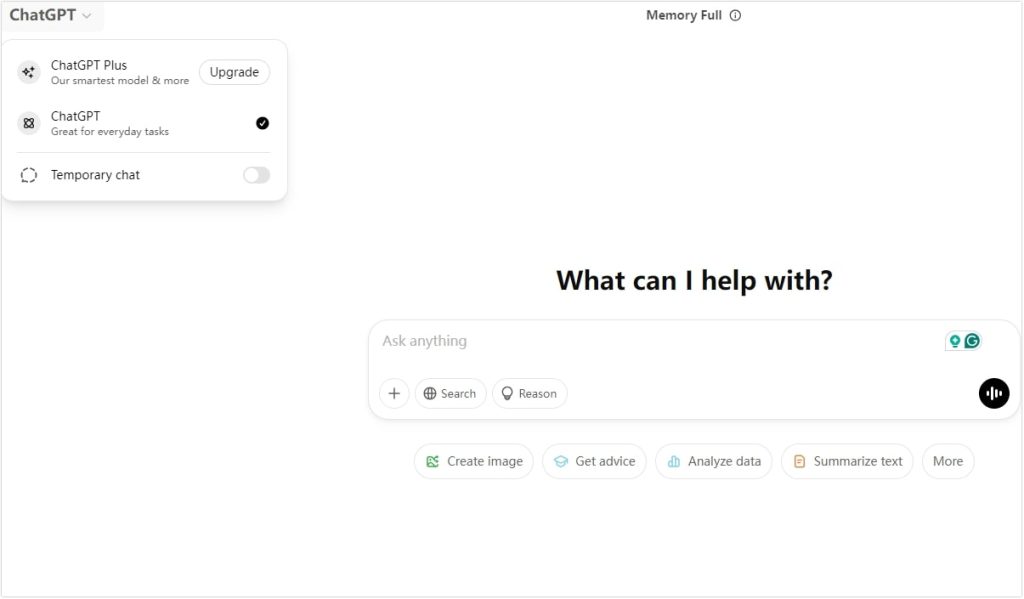
- Supported Formats: Plain text, website URLs (via plugins/custom instructions), and uploaded files (in paid versions).
- Key Features: Conversational refinement, ability to ask follow-up questions, multiple output styles (bullet points, paragraphs, TL;DR), and integration with other AI tasks.
- Pros:
- Extremely flexible and context-aware.
- Can summarize in a specific tone or for a particular audience.
- Widely accessible and constantly improving.
- Cons:
- Can be verbose if prompts are not precise.
- File upload for summarization is primarily a feature of the paid tier.
- Not a dedicated, one-click summarization tool.
- Best For: Users who want a conversational, highly customizable summarization experience and don’t mind crafting precise prompts.
Expert Comment: “ChatGPT’s strength in summarization lies in its adaptability. You can command it to ‘summarize this for a 10-year-old’ or ‘extract only the financial projections,’ making it one of the most dynamic tools available, provided you know how to guide it.”
2. Adobe Acrobat Summary Generator
Adobe Acrobat Summary Generator brings the power of AI directly into the world’s most trusted PDF ecosystem. It’s a native feature for Acrobat subscribers, offering seamless summarization without leaving the document.
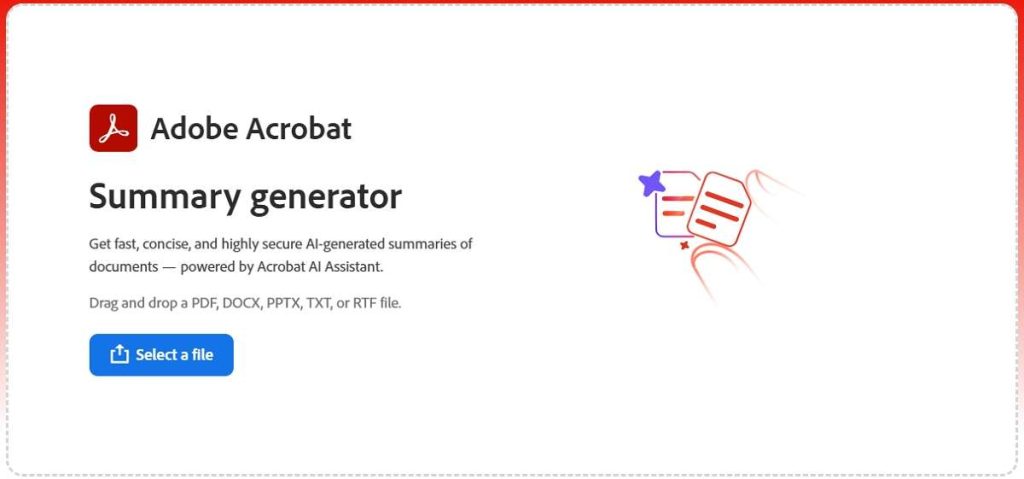
- Supported Formats: PDF, PPTX, DOCX, TXT, and RTF File.
- Key Features: Integrated directly into Acrobat Reader and Pro, generates a summary sidebar with key points, provides clickable navigation to relevant sections, and maintains full document security.
- Pros:
- Unmatched for PDF-specific summarization.
- Deeply integrated and user-friendly.
- Leverages Adobe’s reputation for security and reliability.
- Cons:
- Exclusively for PDFs.
- Requires an Adobe Acrobat subscription.
- Best For: Professionals and students who regularly work with PDFs and are already in the Adobe ecosystem.
User Comment: “As a researcher, I live in PDFs. The Adobe Acrobat AI summary is a game-changer. I can get the gist of a 50-page paper in seconds without uploading files to a third-party service. It’s fast, secure, and incredibly convenient.”
3. EaseMate AI Document Summarizer
EaseMate AI Document Summarizer is a specialized tool designed for interactive document handling. It goes beyond simple summarization by allowing you to “chat” with your documents.
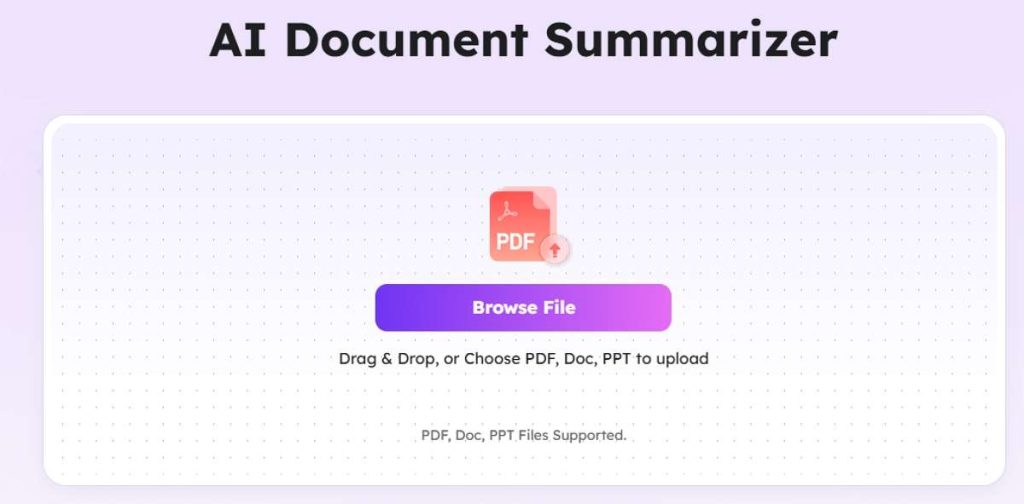
- Supported Formats: PDF, PPT, Doc.
- Key Features: Upload and chat with documents, ask specific questions about the content, get quick summaries, and extract key information through a conversational interface.
- Pros:
- Strong multi-format support.
- Interactive Q&A feature is extremely useful for deep analysis.
- Simple, intuitive interface.
- Cons:
- May have usage limits on free tiers.
- Primarily focused on the chat-based model rather than one-click summaries.
- Best For: Anyone who needs to not just summarize but also interrogate documents for specific answers, such as analysts and consultants.
4. NoteGPT AI Summarizer
NoteGPT AI Summarizer positions itself as an all-in-one productivity tool. It specializes in summarizing YouTube videos, web articles, and documents, and allows you to save and manage these summaries in a personal knowledge base.
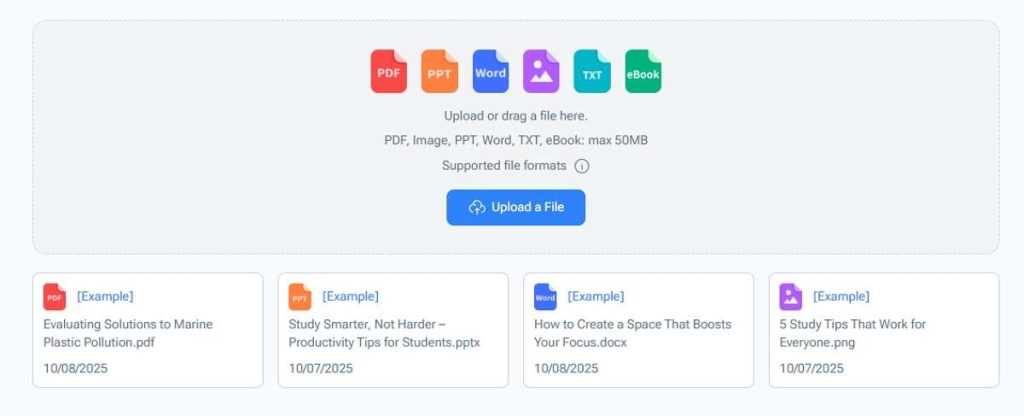
- Supported Formats: Website URLs, YouTube videos, and uploaded files (PDF, TXT, PPT, Word, Image).
- Key Features: Browser extension for one-click web summarization, YouTube transcript summarizer, note-taking capabilities, and a personal library for saved summaries.
- Pros:
- Excellent for content consumers and researchers.
- The YouTube summary feature is a standout.
- Combines summarization with knowledge management.
- Cons:
- The interface can feel busy with all its features.
- Advanced features may be locked behind a subscription.
- Best For: Students, researchers, and content creators who need to summarize and organize information from diverse sources like videos and blogs.
5. HyperWrite AI Summarizer
HyperWrite AI Summarizer is a straightforward, web-based tool from a suite of AI writing assistants. It focuses on doing one job well: providing quick, accurate summaries of book/textbook.
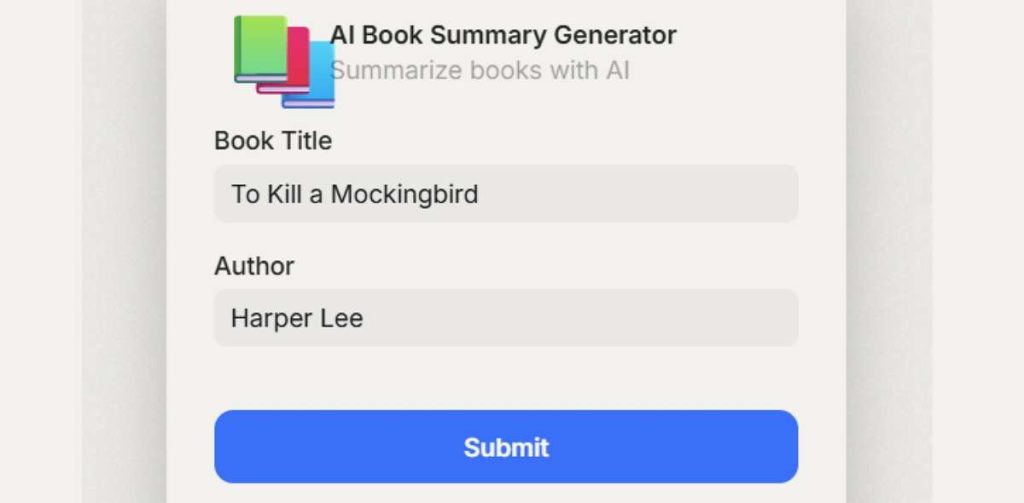
- Supported Formats: Plain text.
- Key Features: Simple text box input, adjustable summary length, clean and distraction-free interface, and part of a larger AI toolkit.
- Pros:
- Extremely easy to use with no learning curve.
- Fast results.
- Offers a generous free plan.
- Cons:
- No direct file upload or URL support; text must be copied and pasted.
- Lacks the advanced features of more comprehensive tools.
- Best For: Users who need quick, no-frills summaries of text snippets and prefer a simple, clean tool.
Expert Comment: “HyperWrite’s summarizer is the epitome of simplicity and efficiency. For users who don’t need complex integrations and just want to paste text and get a condensed version, it’s arguably one of the best AI for summarizing text blocks quickly.”
6. iWeaver AI Summarizer
iWeaver AI Summarizer takes a knowledge-management-centric approach. It is designed not only to summarize content from various sources but also to connect ideas and build a personalized knowledge graph.
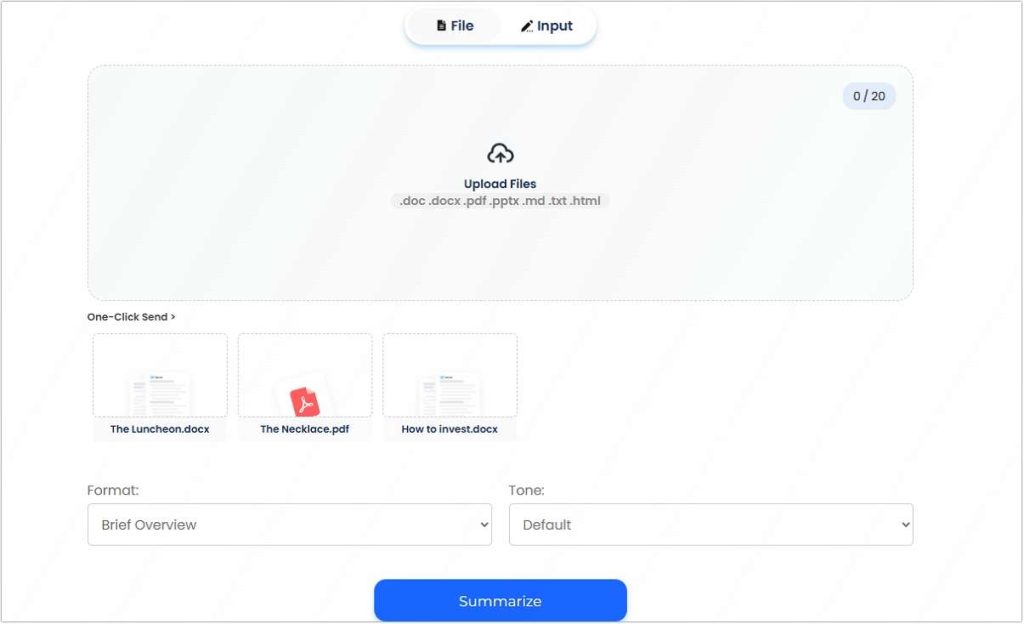
- Supported Formats: Websites, PDFs, YouTube videos, audio files, and images (with OCR),Doc, Docx, PPTX, md, TXT.
- Key Features: Multi-source input, mind map generation from summaries, AI-driven Q&A, and a centralized dashboard for all your summarized content.
- Pros:
- Excellent for visual learners who benefit from mind maps.
- Strong focus on connecting ideas across different documents.
- Broad format support.
- Cons:
- The knowledge base approach might be overkill for users wanting only one-off summaries.
- Steeper learning curve to utilize all features.
- Best For: Academics, writers, and strategists who need to synthesize information from multiple sources into a coherent knowledge system.
7. Noiz AI Summarizer
Noiz AI Summarizer aims to cut through the “noise” of information overload. It offers a clean, modern platform for summarizing web content and documents with a focus on clarity and insight.
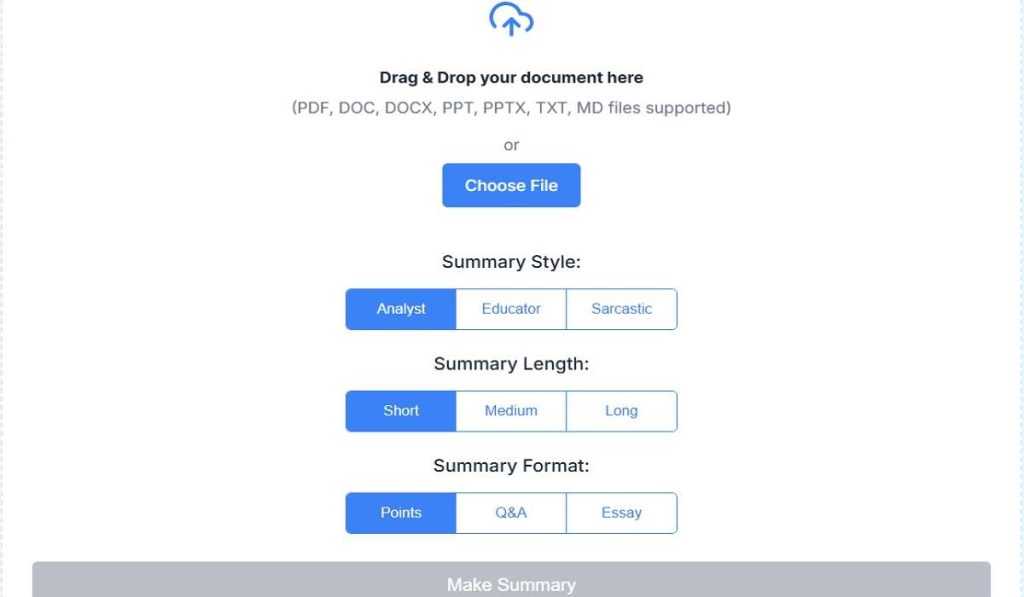
- Supported Formats: URLs, PDF, DOC, DOCX, PPT, PPTX, TXT, MD,
- Key Features: Browser extension, key insight extraction, “explain it to me like I’m 10” simple-mode, and a clean, user-friendly interface.
- Pros:
- Very intuitive and visually appealing.
- Good at extracting actionable insights, not just summaries.
- The simplification feature is great for complex topics.
- Cons:
- May not have as many advanced customization options as some competitors.
- Relatively new on the market.
- Best For: Professionals and everyday users who want a beautiful, straightforward tool to quickly understand online articles and reports.
8. MyMap AI Summarizer
MyMap AI Summarizer differentiates itself by turning text into visual mind maps. It’s the ideal tool for those who think and learn visually, transforming linear documents into structured diagrams.
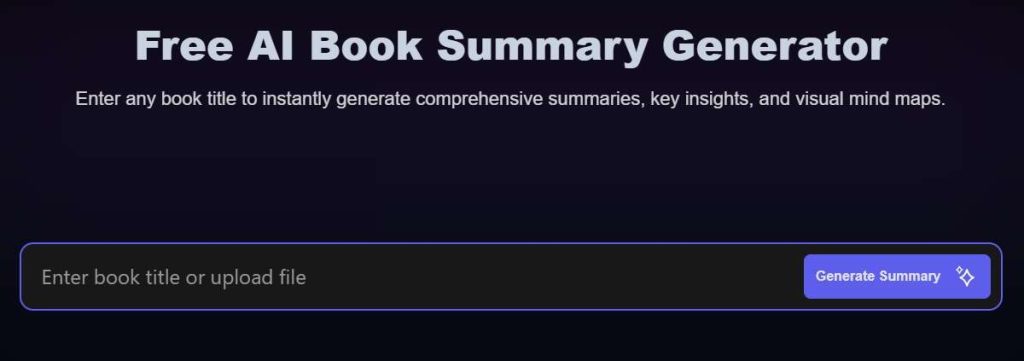
- Supported Formats: Plain text, URLs (via the web app).
- Key Features: Automatic mind map generation from text, easy editing and customization of maps, and shareable visual summaries.
- Pros:
- Unique visual output aids in understanding and retention.
- Excellent for brainstorming and planning based on source material.
- Simple and focused on its core feature.
- Cons:
- Summarization is tied to the mind map format, which may not be for everyone.
- Limited input formats compared to others.
- Best For: Visual thinkers, project managers, and students who need to see the structure and relationships within a piece of text.
User Comment: “MyMap AI has changed how I prepare for presentations. I can feed it a complex article and get a clear mind map in seconds. It helps me visualize the core concepts and present them logically to my team.”
9. Decopy AI Summarizer
Decopy AI Summarizer offers a secure and efficient platform for summarizing sensitive documents. It emphasizes privacy, ensuring that your data is handled with care.
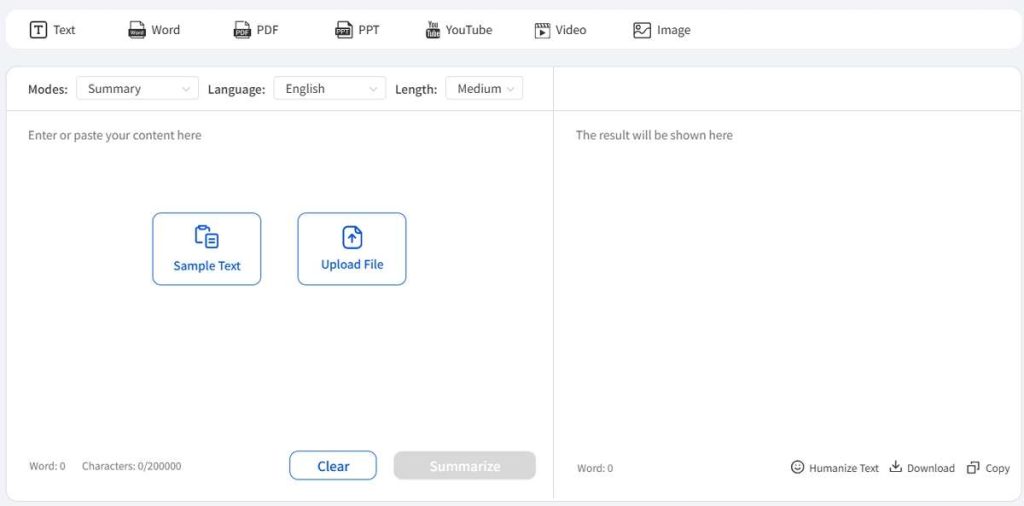
- Supported Formats: Text, PDF, Word, PPT, YouTube, Image
- Key Features: Privacy-focused (claims not to store data), multiple summary modes (key points, concise, detailed), and a simple, secure web interface.
- Pros:
- Strong commitment to user privacy and data security.
- Clean and easy to use.
- Offers different summary modes for flexibility.
- Cons:
- May lack the advanced features and integrations of larger platforms.
- Brand is less established than others.
- Best For: Individuals and businesses handling confidential documents who prioritize data security above all else.
10. 3MinTop AI Summarizer
3MinTop AI Summarizer lives up to its name by promising to deliver the “top” insights in three minutes or less. It’s designed for speed and efficiency, particularly for online content.
- Supported Formats: Website URLs.
- Key Features: Ultra-fast summarization of web links, browser extension, and a focus on delivering the most critical takeaways quickly.
- Pros:
- Incredibly fast and purpose-built for web articles.
- Very simple to use—just paste a link.
- Saves a significant amount of time.
- Cons:
- Only supports URLs, not uploaded documents.
- Limited functionality beyond quick summarization.
- Best For: News junkies, market researchers, and anyone who needs to rapidly process a large number of online articles daily.
FAQs About AI Summarizer
Q1: Is using an AI summarizer considered plagiarism?
A: The summary itself is a derivative work. If you use an AI-generated summary in your own work, it is essential to either properly cite the original source or, better yet, use the summary as a starting point and rewrite it in your own voice to ensure originality and avoid academic or professional misconduct.
Q2: How accurate are AI summarization tools?
A: Accuracy has improved dramatically. The best AI summarizer tools in 2026 are highly proficient at extracting main ideas. However, they can sometimes miss nuanced arguments or subtle context. It’s always advisable to quickly skim the original text to verify critical points.
Q3: Can these tools summarize content in languages other than English?
A: Many of the top tools now support multiple languages, with performance varying based on the language. Models like ChatGPT tend to have broad multilingual support, while smaller, niche tools might be optimized primarily for English. Always check the tool’s specifications.
Q4: Do AI summarizers store my data?
A: Data handling policies vary. Some tools, like Decopy AI, explicitly prioritize privacy and may not store data. Others, particularly free tiers of larger platforms, might use data to improve their models. Always review the privacy policy of any tool before uploading sensitive documents.
Q5: What is the best AI for summarizing YouTube videos?
A: Tools like NoteGPT and iWeaver excel at this specific task. They generate a transcript of the video and then provide a concise summary of the key points discussed, saving you from watching the entire content. Check out the best AI YouTube video summarizers.
Final Words
The landscape of AI summarization tools in 2026 is rich and diverse, offering a specialized solution for nearly every need. From the conversational power of ChatGPT to the PDF-native prowess of Adobe Acrobat and the visual genius of MyMap AI, the best AI summarizer for you ultimately depends on your specific workflow, the formats you use, and how you prefer to consume information.
Investing time in selecting the right tool is an investment in your own productivity and cognitive bandwidth. We encourage you to try the free tiers of a few tools that match your profile. The time you save will compound, allowing you to focus on what truly matters—synthesizing information, generating new ideas, and making informed decisions. Mastering AI summarization is a key productivity skill. Once you’re familiar with these general tools, dive deeper into niche applications like preparing for presentations with an AI slide summarizer or quickly digesting contracts and reports with a specialized AI document summarizer.
What about you? Have you tried any of these tools? Is there a hidden gem in the AI summarizer space that we should know about? Share your experiences and recommendations in the comments below

 English