
Ahrefs vs Semrush vs Ubersuggest: The Latest Comparison
Choosing between Ahrefs, Semrush, and Ubersuggest depends on what you need from your SEO workflow. In the Ahrefs vs Semrush vs Ubersuggest comparison, Ahrefs stands out for backlink and organic search research, Semrush is a strong choice for broader search marketing, and Ubersuggest appeals to budget-conscious users who want accessible SEO tools. The best option is not necessarily the one with the most features, but the one that helps you make better decisions without paying for capabilities you rarely use.
Ahrefs vs Semrush vs Ubersuggest: Quick Comparison
All three platforms help users discover keywords, research competitors, monitor rankings, and identify opportunities to improve organic traffic. Their main differences lie in their strengths, pricing structures, and the complexity of their workflows.
| Feature | Ahrefs | Semrush | Ubersuggest |
|---|---|---|---|
| Best for | Organic search and backlink research | Broader SEO and search marketing | Budget-conscious SEO |
| Keyword research | Strong | Strong, with broader marketing integrations | Accessible and beginner-friendly |
| Backlink analysis | A core strength | Comprehensive backlink research | Suitable for many basic research tasks |
| Competitor analysis | Organic keywords, pages, and links | SEO competitors and broader marketing insights | Keywords, traffic estimates, and competitor gaps |
| Technical SEO | Site Audit | Site Audit | Site Audit |
| Rank tracking | Available | Available | Available |
| Content workflow | Content discovery and research | Content optimization and marketing workflows | Keyword and content research |
| Cost considerations | Paid plans and limited free tools | Paid plans, with free access for limited exploration | Free access, subscriptions, and lifetime options |
| Best starting point | SEO-focused website owners | Marketers managing multiple search channels | Bloggers and small websites with tight budgets |
This is a qualitative comparison, not a claim that one platform wins every feature test. Exact limits depend on the selected plan.
For current pricing and plan details, consult the official Ahrefs pricing page, Semrush pricing page, and Ubersuggest website. Prices, billing terms, and included limits can change.
The short answer: Choose Ahrefs if backlink and organic search analysis are central to your work, Semrush if you need a broader marketing toolkit, and Ubersuggest if affordability and a straightforward learning curve matter most.
Ahrefs vs Semrush vs Ubersuggest for Keyword Research
Keyword research is more than finding phrases with high search volume. You also need to understand search intent, assess ranking competition, and determine whether a keyword is worth targeting with your available resources.
Ahrefs: Find organic search opportunities
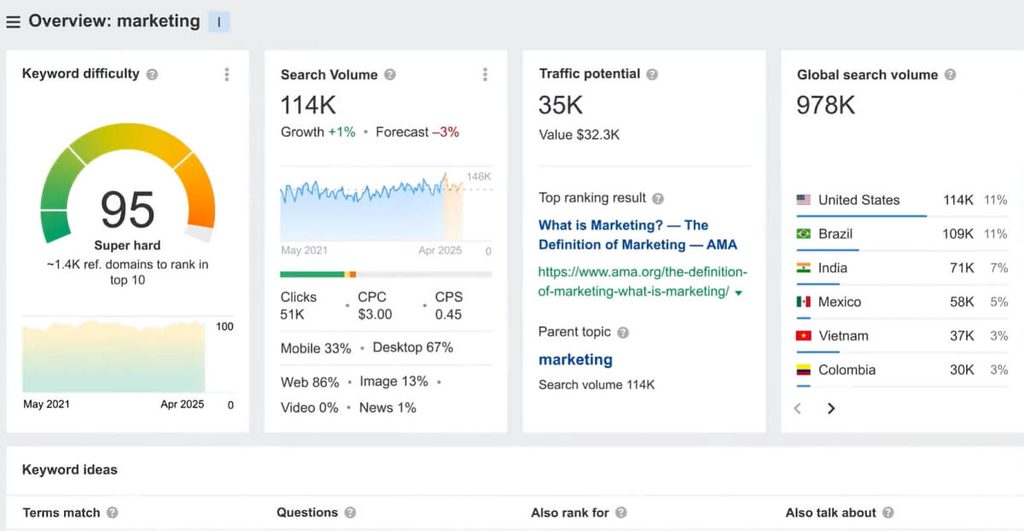
Ahrefs offers keyword research through Keywords Explorer and competitor analysis through Site Explorer. These tools help you investigate estimated search demand, keyword difficulty, ranking pages, and the organic keywords that bring visitors to competing websites.
One particularly useful approach is to analyze a competitor’s top-performing pages before creating new content. Instead of brainstorming topics from scratch, you can identify subjects that already attract search traffic and look for related queries your own website does not cover.
However, keyword difficulty is an estimate, not a guarantee of ranking success. A keyword with a relatively low difficulty score can still be difficult to rank for if the results are dominated by authoritative websites with highly relevant content.
Semrush: Connect keyword research with marketing
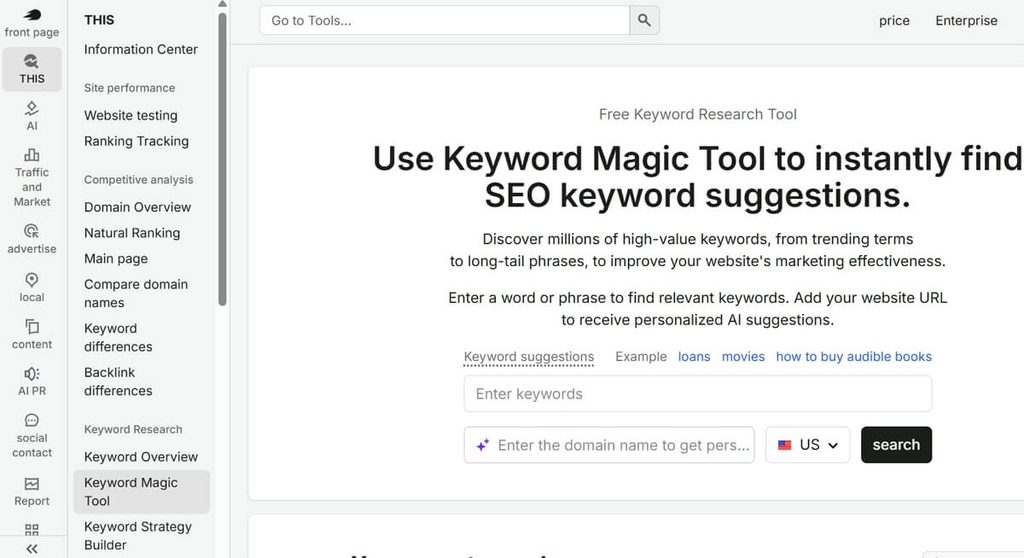
Semrush provides keyword research, competitor analysis, position tracking, and integrations with other marketing workflows. Depending on the plan, users can also access content optimization and historical data.
Its advantage is the ability to connect keyword discovery with broader campaign planning. For example, an in-house marketer can research a commercial keyword, examine competing domains, track target rankings, and coordinate SEO work with paid search activities.
That broader scope can be valuable for businesses managing multiple acquisition channels. On the other hand, solo bloggers who only need a short list of article ideas may find that many of its additional capabilities go unused.
Ubersuggest: Make keyword research more approachable
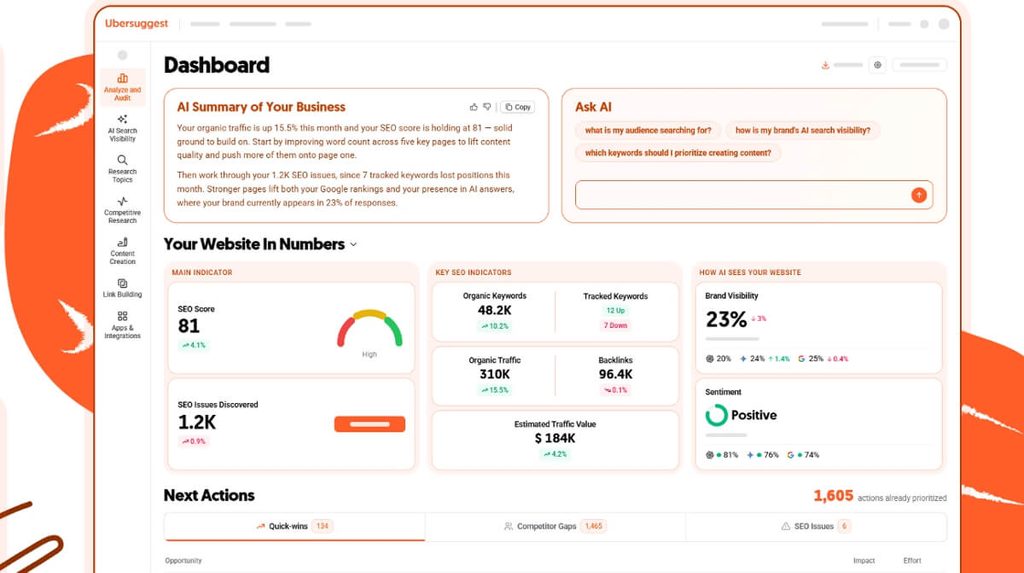
Ubersuggest combines keyword suggestions, competitor research, site auditing, and rank tracking in a relatively accessible interface. It is a practical starting point for people learning how to evaluate search opportunities without immediately adopting a complex professional workflow.
Its appeal is particularly clear when a small website needs to answer basic questions:
- What are people searching for in my niche?
- Which keywords are competitors targeting?
- Are there related phrases worth covering in one article?
- Which existing pages need improvement?
Ubersuggest also offers free access with limitations and paid options, including a lifetime option described on its official website. Check the current terms before choosing a plan.
Keyword research verdict: All three tools can support a useful keyword strategy. Ahrefs is attractive for deep organic competitor research, Semrush is especially useful when keyword research connects to wider marketing activities, and Ubersuggest is a sensible starting point for smaller projects.
Ahrefs vs Semrush vs Ubersuggest for Backlink Analysis
Backlinks are links from other websites to your pages. They can help search engines discover content and may contribute to ranking systems, depending on their relevance, quality, and context.
The important metric is not simply the number of backlinks. You should also examine referring domains, the pages containing those links, and whether the links are relevant to your subject.
Ahrefs: A strong choice for link research
Ahrefs has long emphasized backlink analysis as a core part of its SEO toolkit. Site Explorer lets users investigate backlinks, referring domains, and competitors’ link profiles.
This is useful when developing a link-building strategy. Suppose a competing website has earned links from industry publications because it published an original study. You could investigate those referring pages, determine why the study attracted attention, and develop a genuinely useful resource that serves a similar audience.
That does not mean every backlink can be replicated. Some links are editorial decisions, partnerships, or references to unique research that another website cannot easily reproduce.
Semrush: Backlinks within a broader SEO workflow
Semrush also offers backlink analysis, competitor research, and technical SEO features. Its appeal is the ability to use link data alongside other SEO and marketing reports.
For an agency, that integration may reduce the need to switch between separate tools when preparing client reports or evaluating a competitor’s overall search presence.
Ubersuggest: Backlink research for smaller projects
Ubersuggest provides backlink reports that can help users review competitor link profiles and identify potential opportunities. For a smaller website, this may be enough to begin understanding where competitors earn links.
However, users conducting large-scale link prospecting or highly detailed backlink investigations should compare the actual report depth, filters, export limits, and database coverage available in each plan.
Backlink research verdict: Ahrefs deserves particular consideration when link intelligence is a primary requirement. Semrush is compelling when backlink data must fit into a wider marketing workflow. Ubersuggest can be sufficient for introductory research, depending on the depth and volume of analysis required.
Remember that no backlink database contains every link on the web. Differences between tools are expected, so avoid treating any platform’s link count as a complete measurement of a website’s authority.
Ahrefs vs Semrush vs Ubersuggest: Pricing and Value
Pricing can change the decision considerably, especially for individuals running new websites or small businesses working with limited budgets.
The following figures are examples from the official pricing pages available when this comparison was prepared. They are not guaranteed checkout prices, and taxes, billing frequency, regional offers, and plan changes may affect the final cost.
| Platform | Example starting option | What to consider |
|---|---|---|
| Ahrefs | Starter listed at $29/month; Lite at $129/month | Check usage credits, research limits, and which plan includes the reports you need |
| Semrush | SEO plan listed at $139/month when billed monthly, with an annual-billing equivalent shown at $117.33/month | Consider the value of rank tracking, competitor research, audits, and broader marketing features |
| Ubersuggest | Free access, paid subscriptions, and a lifetime option | Verify current usage limits, lifetime-plan terms, and whether the required features are included |
Sources: Ahrefs plans, Semrush plans, and Ubersuggest plans.
A low advertised price does not automatically mean the lowest cost for your actual workflow. A plan may restrict the number of reports, tracked keywords, projects, or users. If you regularly exceed those limits, a more expensive plan—or a different platform—may be more economical.
A practical way to evaluate value
Consider a small content website publishing eight articles per month.
Its main tasks might be:
- Research keywords and search intent before writing.
- Review competing pages to find missing information.
- Audit the website for technical issues.
- Monitor whether target pages begin ranking.
- Review backlinks when a page needs more authority.
If an affordable tool covers these tasks adequately, paying substantially more for advanced reporting or additional marketing features may not produce a meaningful return.
By contrast, an agency managing dozens of client projects may benefit from higher limits, historical data, advanced reports, and integrations.
The key insight is that SEO software should be evaluated by the decisions it improves, not the volume of data it displays. More reports do not automatically produce better content, stronger links, or higher rankings.
Ahrefs vs Semrush vs Ubersuggest: Which SEO Tool Should You Choose?
Consider these four scenarios to make the decision more concrete.
Scenario 1: You are starting a blog
You need keyword suggestions, basic competitor analysis, and a way to identify technical problems.
Recommendation: Start with Ubersuggest or Ahrefs’ free tools.
Ubersuggest offers an accessible introduction to SEO research. Ahrefs also provides free tools for eligible website owners who verify ownership. Compare the current limitations before paying for either platform.
Scenario 2: You want to study competitors’ organic traffic
Your goal is to find pages that attract search traffic, understand the keywords behind them, and discover content gaps.
Recommendation: Consider Ahrefs first, then compare Semrush.
Both offer competitor research, but the best choice depends on which reports and filters support your particular research process. Try analyzing the same competing domain in each platform before committing.
Scenario 3: You manage SEO and paid search campaigns
You need organic keyword research, ranking reports, site audits, and a broader marketing workflow.
Recommendation: Semrush is a strong candidate.
Its range of SEO and marketing capabilities can be valuable when multiple channels and reporting tasks need to work together. If you only use its basic keyword tools, however, the additional scope may not justify the expense.
Scenario 4: You run an SEO agency
You manage multiple clients, conduct backlink research, produce reports, and monitor rankings regularly.
Recommendation: Compare Ahrefs and Semrush against your operational requirements.
Assess project limits, additional-user costs, exports, historical data, reporting options, and integrations. Choose the platform that supports your team’s recurring work rather than relying on brand reputation alone.
A simple decision framework
- Choose Ahrefs when backlink research and organic search intelligence are your main priorities.
- Choose Semrush when you need SEO combined with a broader set of search marketing tools.
- Choose Ubersuggest when you want accessible SEO research and need to keep costs under control.
Before purchasing, run the same three tasks in each platform: research one target keyword, analyze one competitor, and inspect one website for technical issues. Compare not only the numbers returned, but also how quickly you can turn those numbers into an actionable plan.
That small exercise is often more useful than comparing dozens of features you may never use.
Ahrefs vs Semrush vs Ubersuggest: FAQs
1. Is Ahrefs better than Semrush?
Neither is universally better. Ahrefs is a strong option for backlink research and organic search analysis, while Semrush offers a broader marketing toolkit. Your requirements, plan limits, and preferred workflow should determine the choice.
2. Is Ubersuggest good enough for SEO?
Yes, Ubersuggest can support keyword research, competitor analysis, rank tracking, and basic technical SEO workflows. Websites with more demanding research, reporting, or data requirements should check whether its available limits meet their needs.
3. Which SEO tool is best for beginners?
Ubersuggest is worth considering for beginners who want an accessible interface and a lower-cost starting point. Ahrefs’ free tools can also help website owners understand their own site’s performance. The best choice depends on which features are available without a paid subscription.
4. Which tool is best for backlink analysis?
Ahrefs is a strong candidate when backlink research is a major priority. Semrush also provides backlink analysis, while Ubersuggest offers capabilities suitable for many basic investigations. Compare coverage, filters, and export limits for your use case.
5. Can Ubersuggest replace Ahrefs or Semrush?
It can replace some of their functionality for smaller websites and simpler SEO workflows. However, it may not be a complete substitute when you depend on more advanced competitor research, extensive backlink analysis, historical data, or agency reporting. Compare the specific features you use rather than assuming all three platforms are interchangeable.

 English