7 Best AI Detectors for Free in 2026
The digital landscape in 2026 is inextricably woven with AI-generated text. From marketing copy and blog articles to student essays and business reports, the line between human and machine-authored content is increasingly blurred. This surge has created an urgent need for verification tools, leading to a booming market for AI detection software. But with so many options available, how do you choose the right one? More fundamentally, are these tools even trustworthy?
To answer these questions, we’ve put the leading platforms through rigorous testing. This guide delves into the seven best AI detectors available today, scrutinizing their accuracy, features, and ideal use cases. We’ll also tackle the critical questions surrounding their technology: How do AI detectors work?, Is an AI detector accurate?, and Are AI detectors reliable? By the end of this review, you’ll be equipped with the knowledge to select a tool you can trust.
Do AI Detectors Actually Work?
This is the most pressing question for educators, publishers, and content managers. The short answer is: yes, but with important caveats. The current generation of best AI detectors operates by analyzing textual patterns that are often imperceptible to the human eye. They are trained on massive datasets of both human-written and AI-generated text, learning to identify statistical fingerprints related to word choice, sentence structure, and overall predictability.
However, their effectiveness is not absolute. They excel at detecting content from earlier or less sophisticated AI models but can struggle with text that has been heavily edited, paraphrased, or generated by the latest, most advanced LLMs (Large Language Models). Furthermore, high-quality human writing that is particularly formal or uniform can sometimes be incorrectly flagged. So, while they are powerful tools for identifying potential AI content, they should be used as part of a broader assessment strategy rather than as sole arbiters of authenticity.
Is AI Detector Accurate and Reliable?
The questions “Is AI detector accurate?” and “Are AI detectors reliable?” are at the heart of the debate. Accuracy and reliability are not binary; they exist on a spectrum influenced by several factors:
- The Tool’s Training Data: Detectors trained on diverse and current datasets generally perform better.
- Text Perplexity and Burstiness: Human writing tends to be more unpredictable (high perplexity) and varied in sentence length (high burstiness). AI text is often more uniform. Detectors measure this.
- Text Length and Quality: Shorter text snippets provide less data for analysis, reducing accuracy. Well-edited AI content can “fool” detectors.
- The AI Model Used: A detector might be excellent at spotting GPT-3.5 text but less effective against a fine-tuned or specialized model.
No tool offers 100% accuracy. Reputable providers are transparent about their confidence levels and false-positive rates. For instance, a result that says “likely AI-generated” with 98% confidence is far more reliable than a simple binary “AI” or “Human” output. The most trustworthy best AI detectors provide these nuanced, probability-based results and encourage human review.
How Does an AI Detector Work?
Understanding how AI detectors work is key to using them effectively. The process is a sophisticated form of pattern recognition.
- Text Analysis: The tool breaks down the submitted text into its constituent parts.
- Feature Extraction: It analyzes specific “features,” including:
- Perplexity: Measures how “surprised” the model is by the word choices. Lower perplexity often indicates AI origin.
- Burstiness: Analyzes the variation in sentence structure and length. Human writing is typically more “bursty.”
- Semantic & Syntactic Patterns: Examines the predictability of grammar, phrasing, and overall coherence.
- Classification: The extracted features are fed into a classification algorithm. This algorithm, trained on millions of text samples, calculates a probability score indicating the likelihood that the text was AI-generated.
This entire process of how ai detectors work happens in seconds, providing users with a rapid assessment. It’s a technological arms race, with both generation and detection models constantly evolving.
7 of the Best AI Detectors in 2026
After extensive testing, here are our top picks for the best AI detectors this year.
1. GPTZero
GPTZero is a pioneer in the AI detection space, developed specifically to address the rise of ChatGPT. It has evolved into a robust platform for educators and organizations.
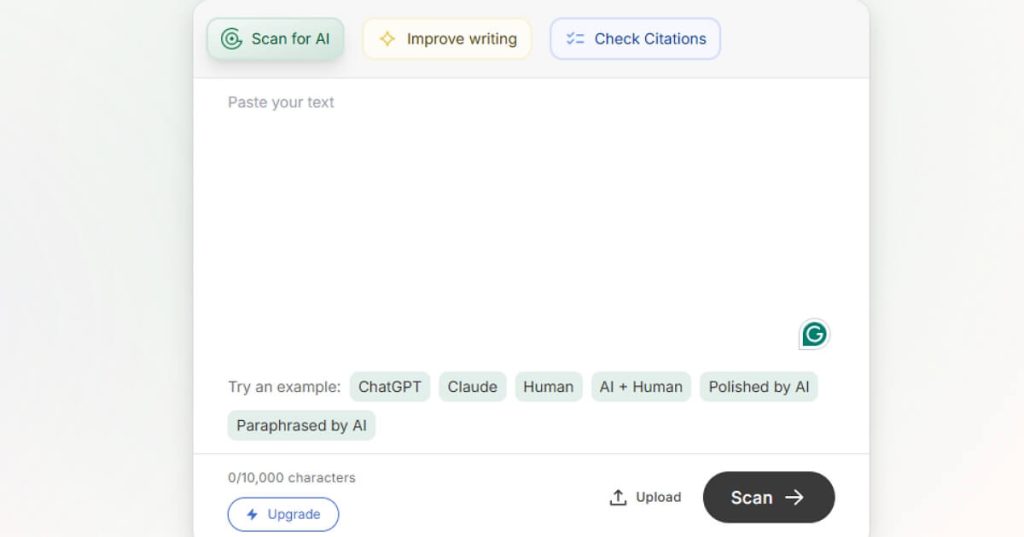
- Best for: Educators and academic institutions.
- Key Features: “Deep Analysis” mode for longer documents, sentence-by-sentence highlighting, API integration for learning management systems, and an originality score.
- Pros: High accuracy for academic-style writing, transparent results, strong reputation in the education sector.
- Cons: The free version has limited word count; premium plans can be costly for individual users.
- Expert Comment: “GPTZero remains a gold standard in educational settings. Its sentence-level highlighting provides tangible evidence for discussions with students about academic integrity.” – Dr. Elena Rodriguez, EdTech Consultant.
2. QuillBot AI Detector
As part of the popular QuillBot suite, the QuillBot AI Detector offers a straightforward, no-frills approach to detection, making it one of the more accessible best ai detectors free tools. And It’s also one of the best free AI essay detectors.
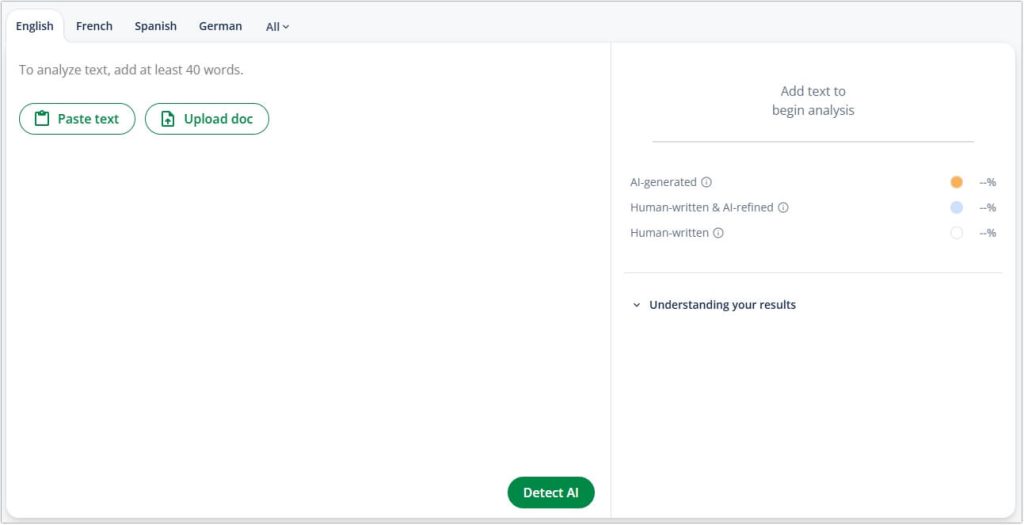
- Best for: Writers and students who need a quick, free check.
- Key Features: Simple, clean interface; direct integration with QuillBot’s paraphrasing tool; immediate results with a percentage score.
- Pros: Completely free, easy to use, excellent for quick spot-checks.
- Cons: Less detailed than competitors; can struggle with mixed-source or heavily edited content.
- User Comment: “I use it as a first pass on my drafts. It’s fast and free, which is perfect for my budget as a freelance writer.” – Mark S., Content Creator.
3. Scribbr’s Free AI Detector
Scribbr’s free AI detector is built on the same powerful engine as Turnitin and is designed with academic integrity at its core. It’s a specialized, trustworthy tool.
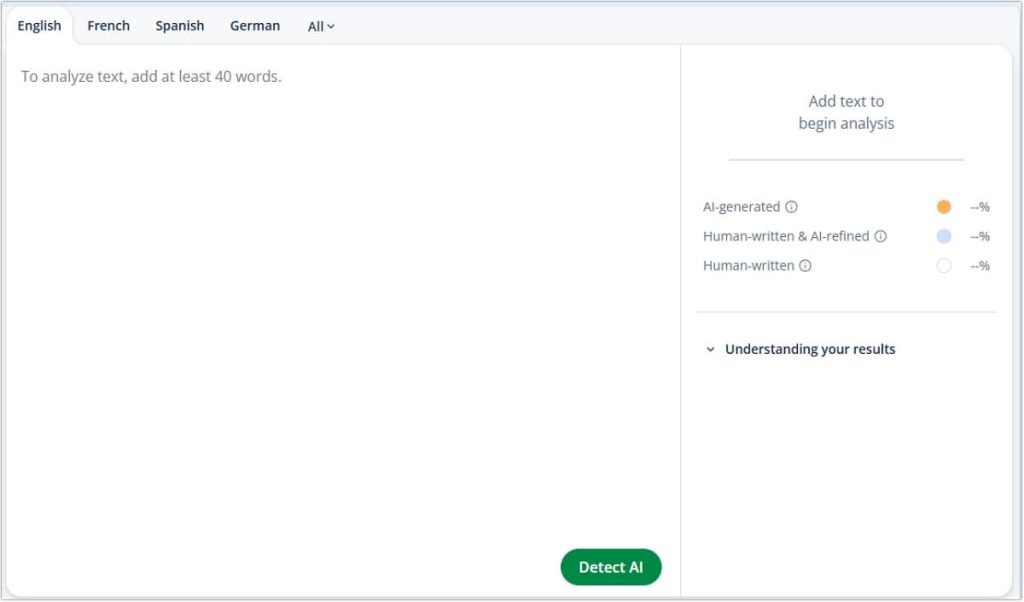
- Best for: Students and researchers verifying their own work before submission.
- Key Features: Powered by Turnitin’s model, trained exclusively on academic content, 99% accuracy claim for documents over 300 words, completely free.
- Pros: Unbeatable for academic text, high accuracy, truly free with no word limits.
- Cons: Designed solely for the academic context; not ideal for marketing or creative content.
- Expert Comment: “For students wanting to self-check, Scribbr is the most reliable free tool available. Its direct link to Turnitin’s technology gives it immense credibility.” – Prof. James Miller, University Department Head.
4. AI Detector by Grammarly
Grammarly’s AI Detector is integrated directly into its premium offering, positioning itself as an all-in-one writing assistant that can also vouch for the originality of your work.
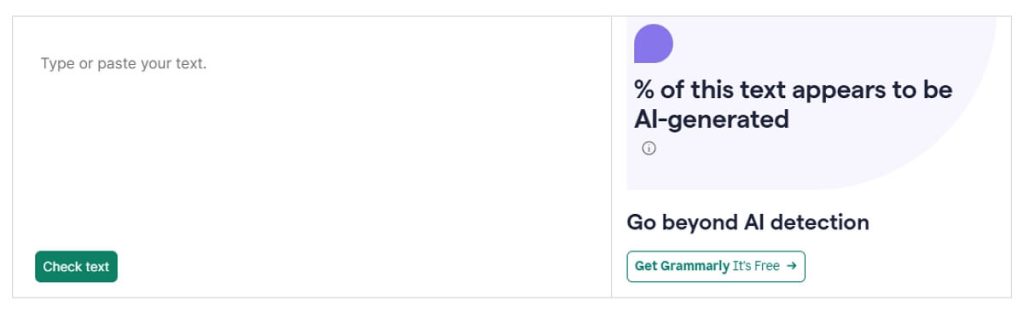
- Best for: Professionals and writers already using the Grammarly ecosystem.
- Key Features: Seamless integration with Grammarly’s grammar, tone, and plagiarism checks; provides real-time suggestions alongside detection.
- Pros: Incredibly convenient for existing users, part of a holistic writing workflow.
- Cons: Only available with a Grammarly Premium subscription; detection is not its primary function.
- User Comment: “Having the AI detection right next to my grammar check is a game-changer. It streamlines my entire editing process.” – Sarah L., Technical Writer.
5. NoteGPT’s AI Detector
NoteGPT’s AI Detector is a modern tool that combines AI detection with other utilities like summarization and note-taking, appealing to users who need a multi-functional toolkit.
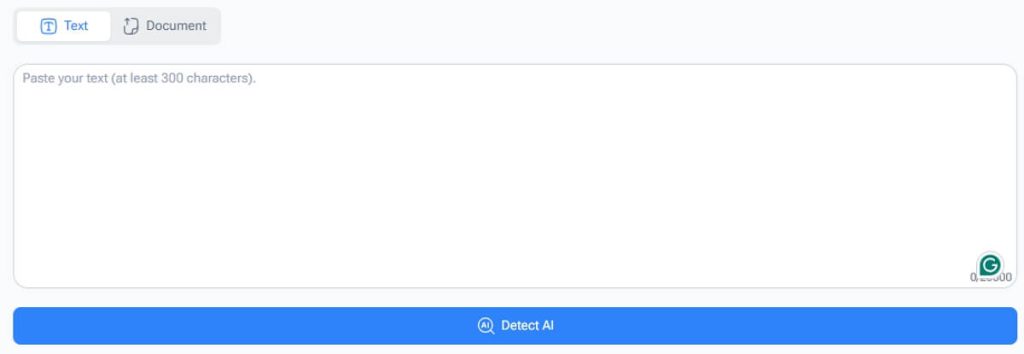
- Best for: Users who need a versatile tool for content analysis and organization.
- Key Features: AI detection, text summarization, online note-taking, and a browser extension for easy access.
- Pros: Multi-purpose functionality, user-friendly interface, good for content creators managing multiple tasks.
- Cons: As a newer player, its detection model may not be as battle-tested as some established competitors.
- User Comment: “I live in my browser, and the NoteGPT extension is always on. Checking an article or saving notes is incredibly smooth.” – David K., Digital Marketer.
6. Turnitin’s AI Content Checker
Turnitin’s AI content checker needs little introduction in academia. It’s the institutional standard for plagiarism detection and has integrated powerful AI writing detection directly into its platform.
- Best for: Universities, colleges, and institutions requiring robust, integrated integrity solutions.
- Key Features: Deep integration with Turnitin’s Feedback Studio and learning management systems (LMS), high-grade security, detailed reporting for instructors.
- Pros: The most trusted name in academic integrity, highly accurate, built for scale and security.
- Cons: Not available for individual, non-institutional purchase; results are part of a broader academic process.
- Expert Comment: “Turnitin’s integration into the existing assessment workflow is its greatest strength. It provides a consistent and defensible framework for addressing AI writing.” – Linda Chen, Academic Integrity Officer.
7. Copyleaks AI Text Detector
Copyleaks AI text detector is a enterprise-grade solution known for its high accuracy and ability to detect content from a wide range of AI models, including GPT-4, Gemini, and Claude. It is also an excellent AI Image Detector.
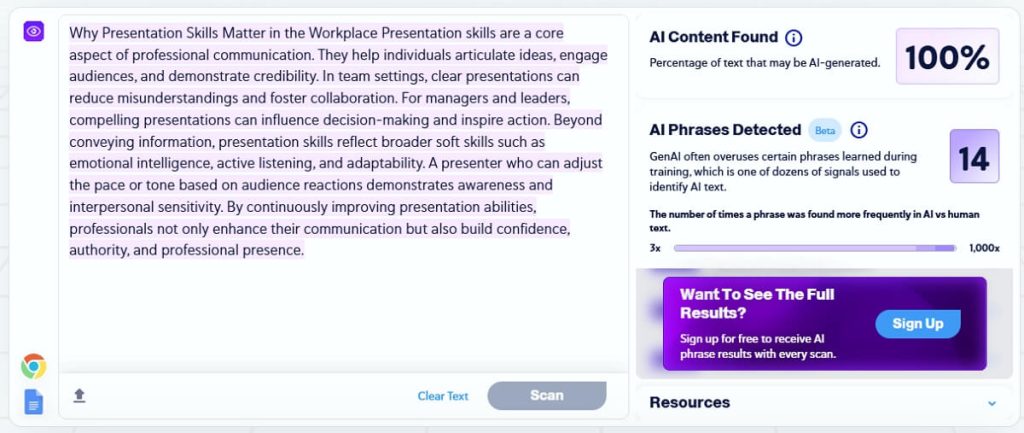
- Best for: Enterprises, publishers, and SEO professionals.
- Key Features: Model-specific detection, multi-language support (over 30 languages), API access, and a comprehensive plagiarism detection suite.
- Pros: Exceptionally high accuracy, scalable for large content volumes, trusted by major corporations.
- Cons: The pricing model is enterprise-focused, making it less accessible for individuals.
- Expert Comment: “In our internal tests, Copyleaks consistently identified AI-generated content across different models with remarkable precision. It’s our go-to for client-facing content audits.” – Michael Brown, Head of SEO at a Digital Agency.
Final Words
The ecosystem of AI detectors is maturing rapidly, offering a range of powerful tools for different needs and budgets. Whether you’re a student ensuring your work is original, a teacher upholding academic standards, or a publisher maintaining content quality, there is a tool among the best AI detectors for you. Remember, these tools are aids to human judgment, not replacements for it. Use their outputs as a starting point for a deeper, more nuanced evaluation of the content in question.
Have you used any of these AI detectors? What has your experience been regarding their accuracy and reliability? Do you have another tool you swear by? Share your thoughts and questions in the comments below—let’s continue the conversation.
For readers who need specialized tools, you can also explore our in-depth guides on AI Voice Detectors, AI Image Detectors, AI Essay Detectors, and AI Content Checkers.
 English
Check ai content
This is a really helpful roundup! It’s great to see so many options for checking text. I was also wondering if anyone knows a good tool to Check ai content specifically in PowerPoint files? That would be super useful for my presentations.